,

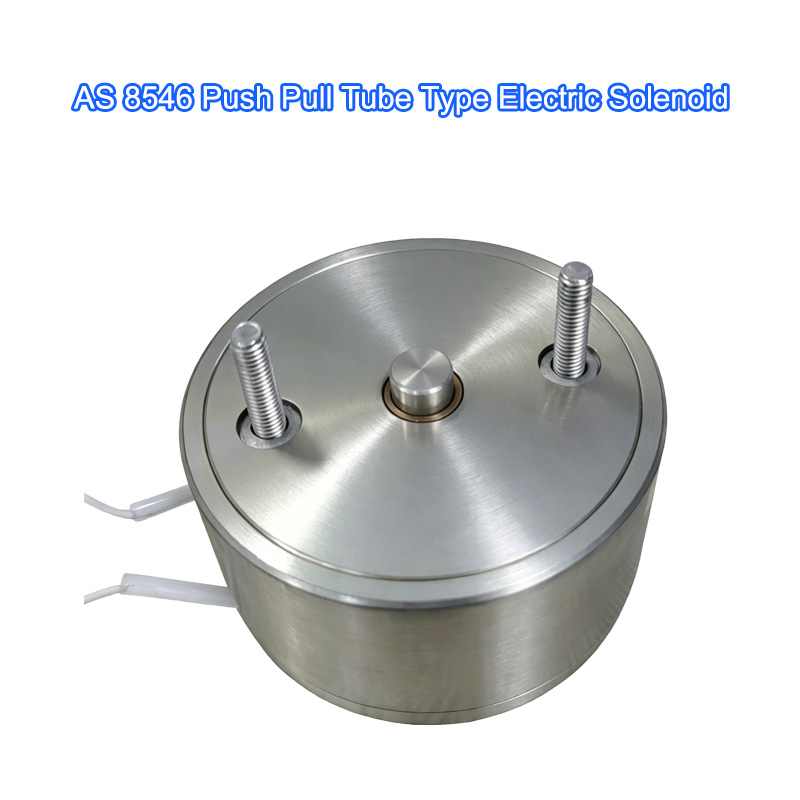
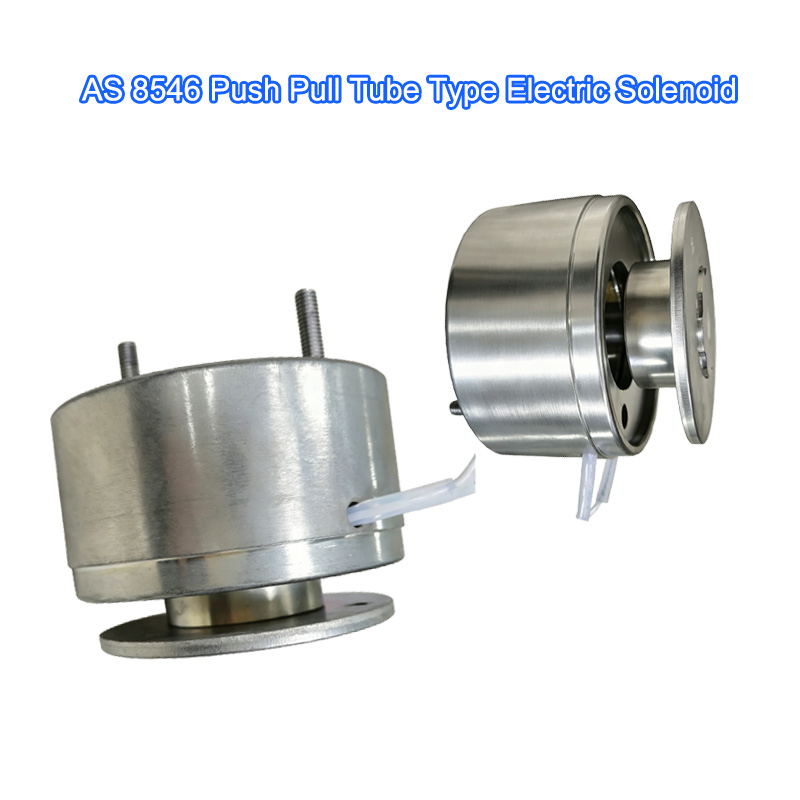
AS 8546 Electric Linear Solenoid Tube Style Push Pull Actuator

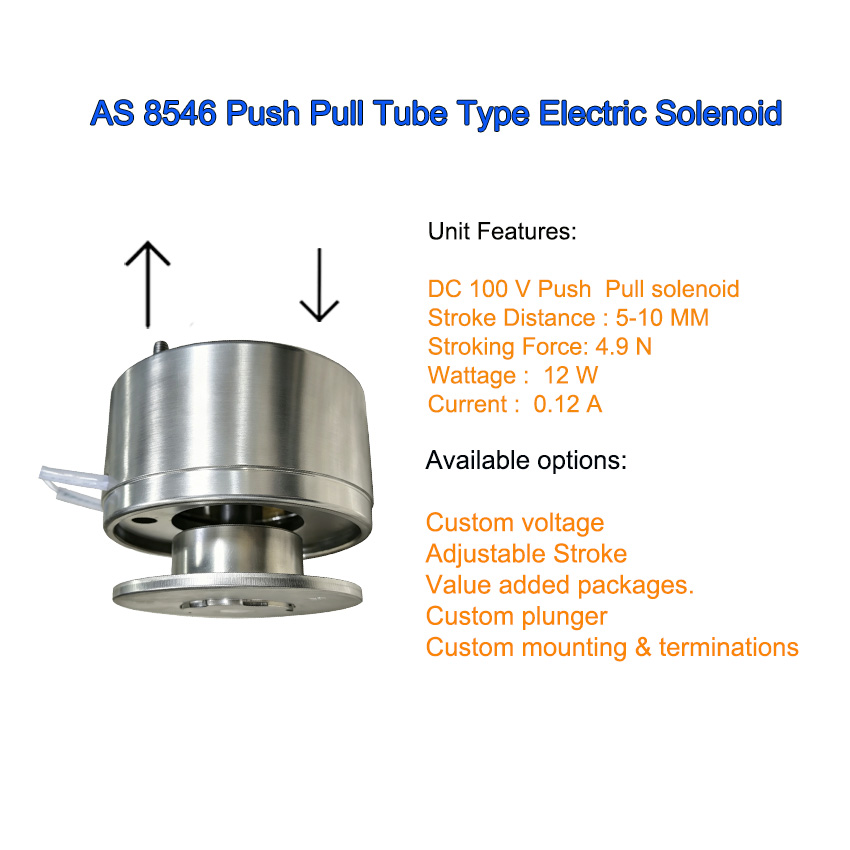
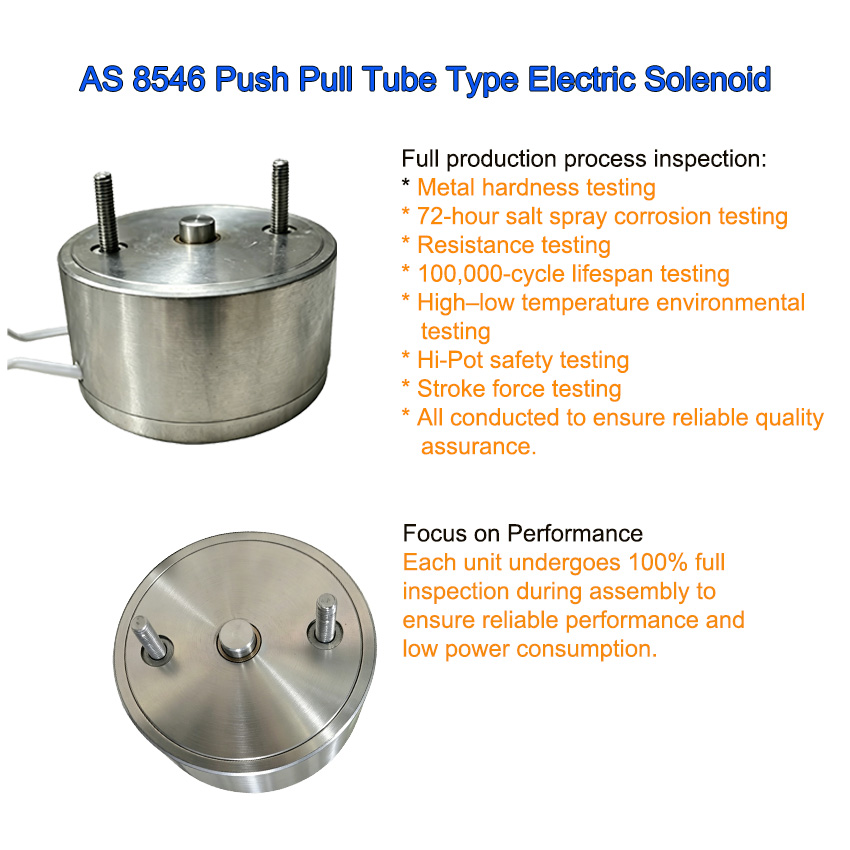
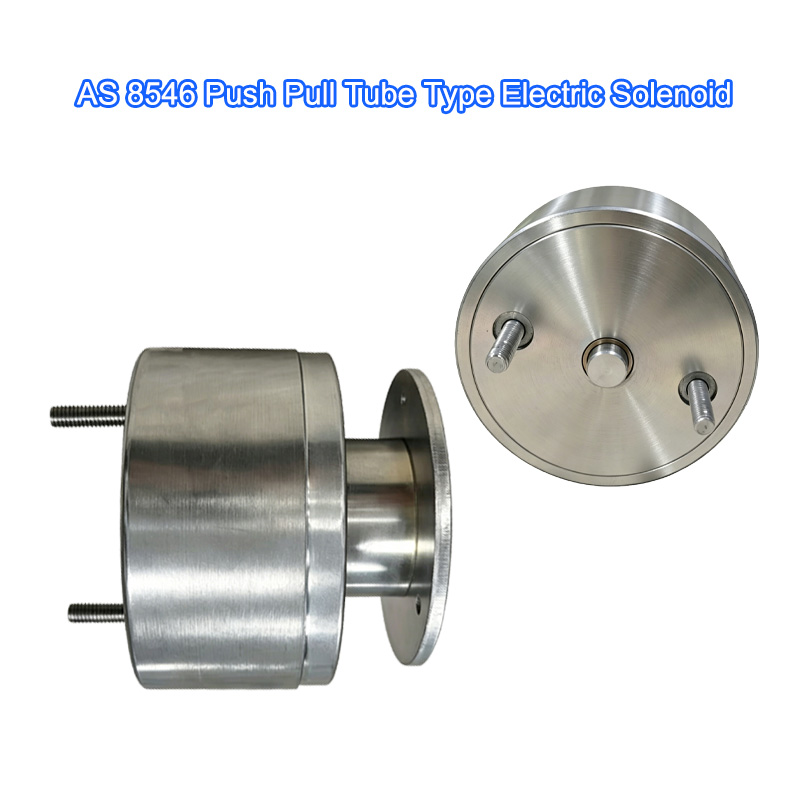
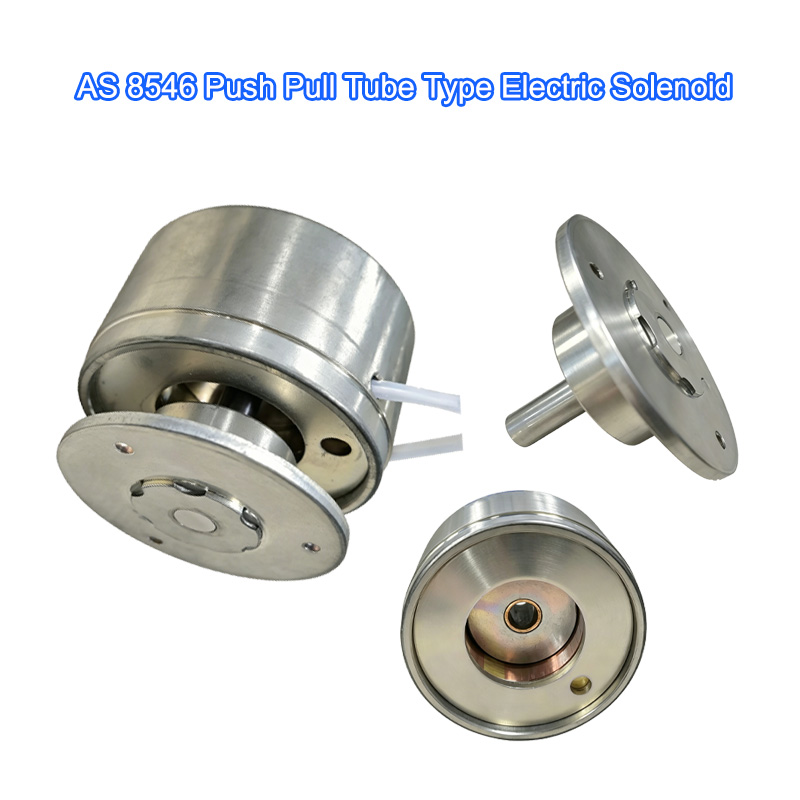
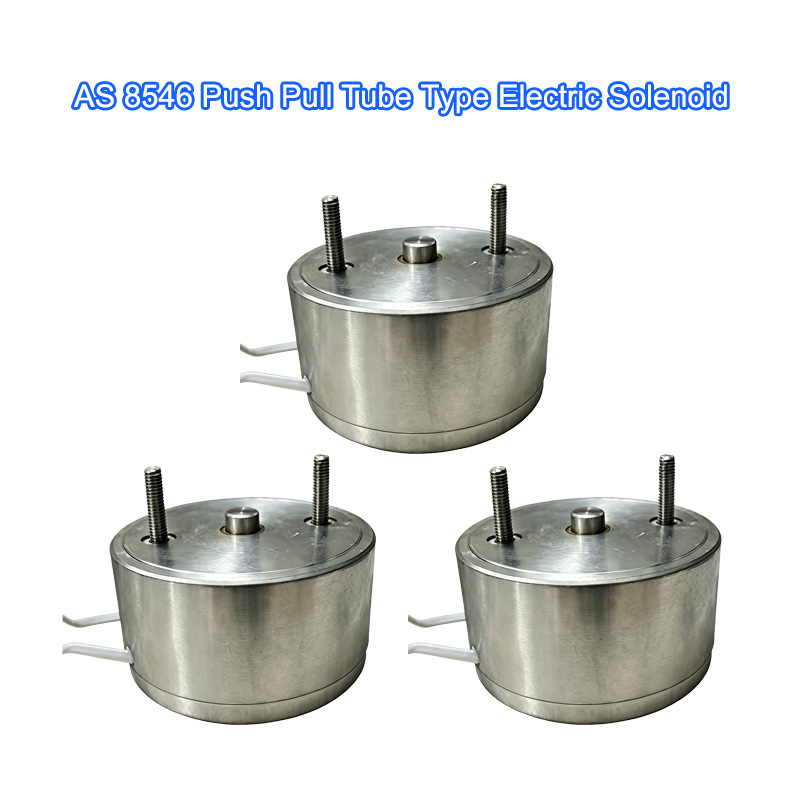
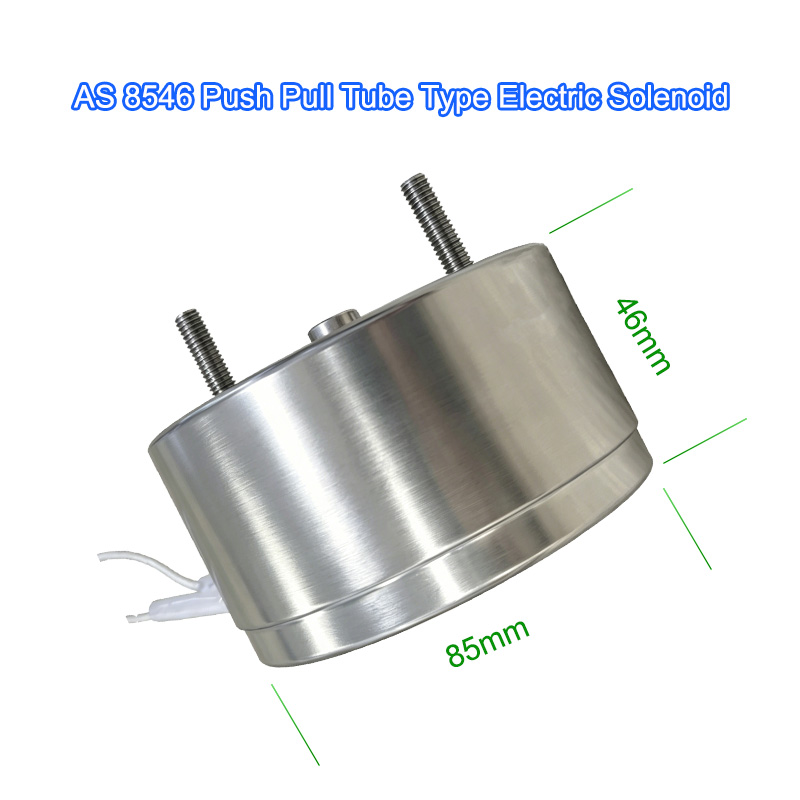
Our AS 8546 is a heavy-duty tube-style push-pull electric solenoid actuator, specially engineered for industrial control and automation tasks. Built with a robust tubular body, this electromagnetic unit provides smooth, precise linear movement and quick response during operation. We use premium coils and tough internal components, so it runs reliably for years and requires very little upkeep. Easy to mount in multiple ways, it fits well with mechanical machinery, automated setups and various control equipment. Delivering steady performance in daily use, it is a practical, budget-friendly choice to meet your push-pull motion control requirements in a wide range of industrial applications.

Product Video

Product Specification

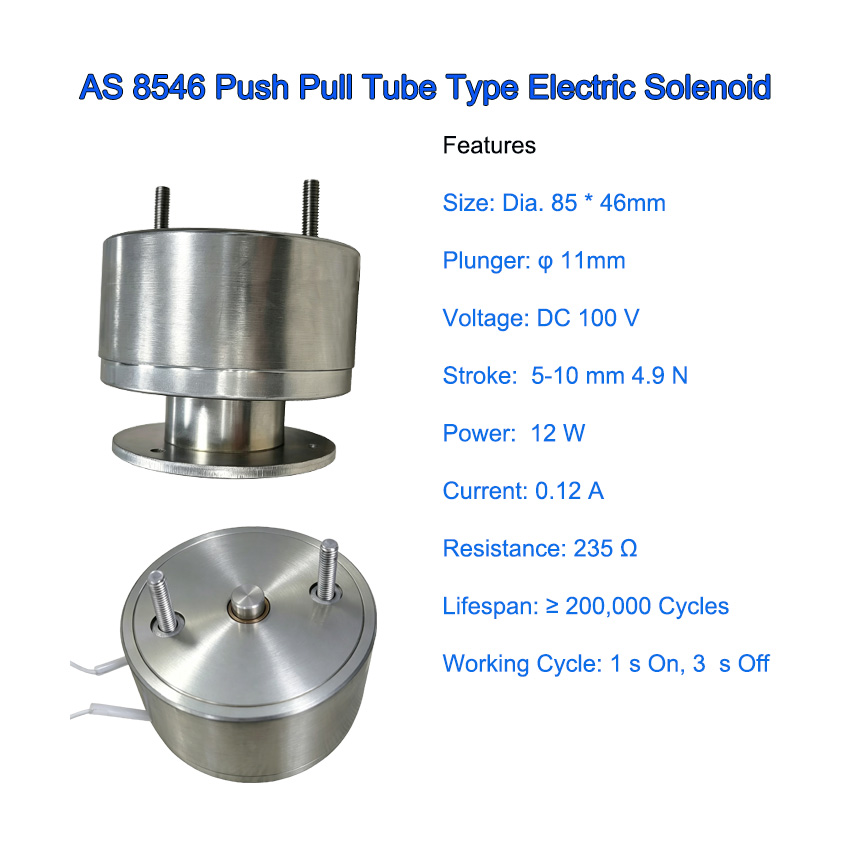
Brand AstSolenoid Model Number AS 8546
Rated Voltage (V) DC100V Rated Power(W) 10-20W
Work Mode Push and Pull Holding Force (N) 2–5N
Stroke(mm) 5–10 MM Customized Reset Time(s) 1 S On,3 S OFF
Service Life 200 Thousand Times Certification CE,ROHS,ISO9001,
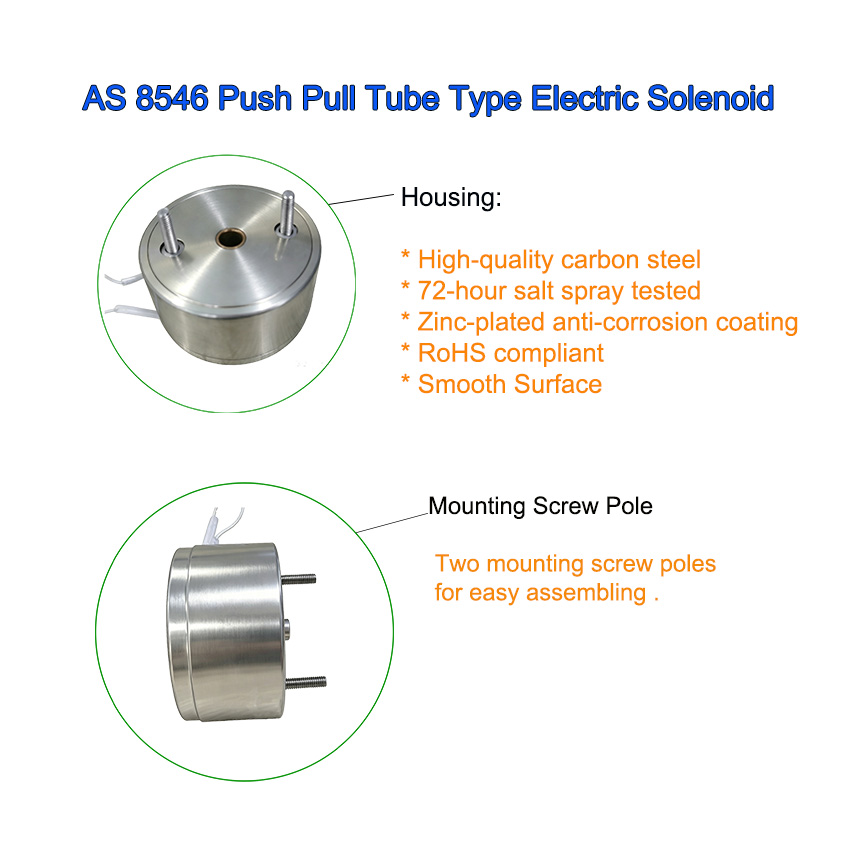
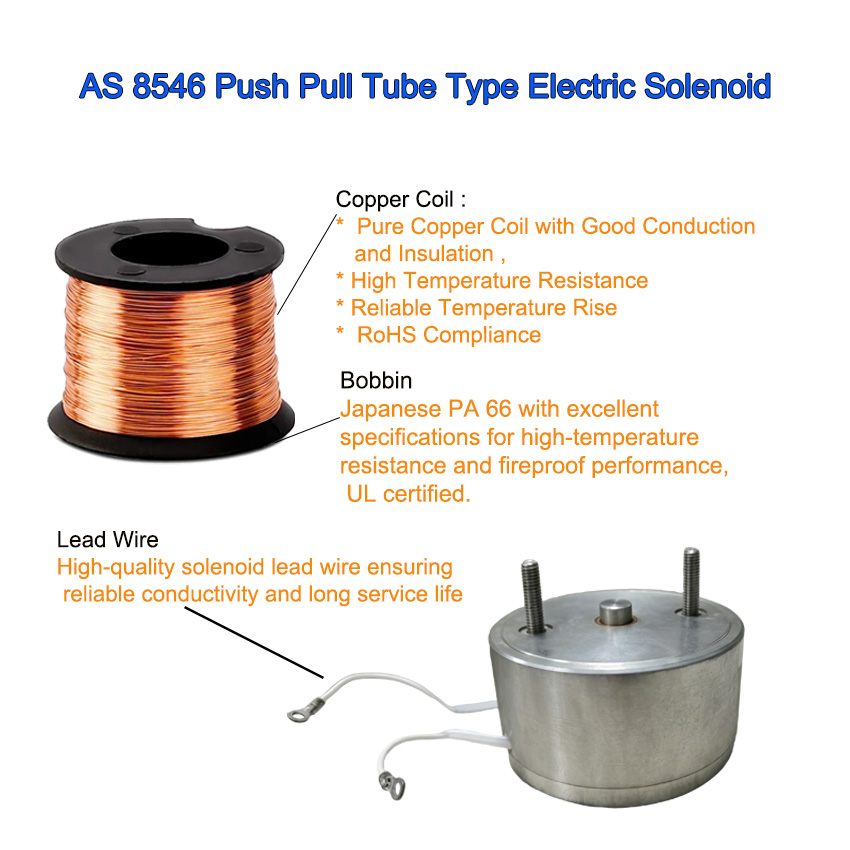
Material Superior Magnet Iron Lead Wire Length(mm) 200 MM
Install Style Screw Tolerance of Dimension  +/-  0.1 MM
Water-proof  None Insulation Class B
Hi-Pot Test AC 600V 50/60Hz 2s Non-excitation Holding Force 0
Working Temperature -10°C-100°C Duty Cycle 1-100%
Thread Depth(mm) / Payment Term TT, or LC At Sight
Sample Order Yes Warranty 1 Year
MOQ 1000 pcs Supply Ability 5000 pcs per Week
Delivery Time 30 Days Port of Loading shenzhen

Product Description

Tubular Push Pull Electromagnet: How Does a Push-Pull Solenoid Work?
A push-pull solenoid is a practical electromechanical device. It turns electric power into straight, back-and-forth mechanical movement. This includes both pushing and pulling motions. It relies on basic electromagnetic force to deliver stable, controlled linear motion for various industrial and commercial applications.
Basic Structure of a Push-Pull Solenoid
Every core component works together to ensure precise bidirectional movement. The main parts are simple and durable.
Coil: It is made of copper wire wrapped tightly around a plastic or metal bobbin. It creates a stable magnetic field immediately when electric current passes through it.
Plunger (Armature): This is a movable soft iron core. It sits inside the coil. It moves freely to deliver push or pull force under magnetic action.
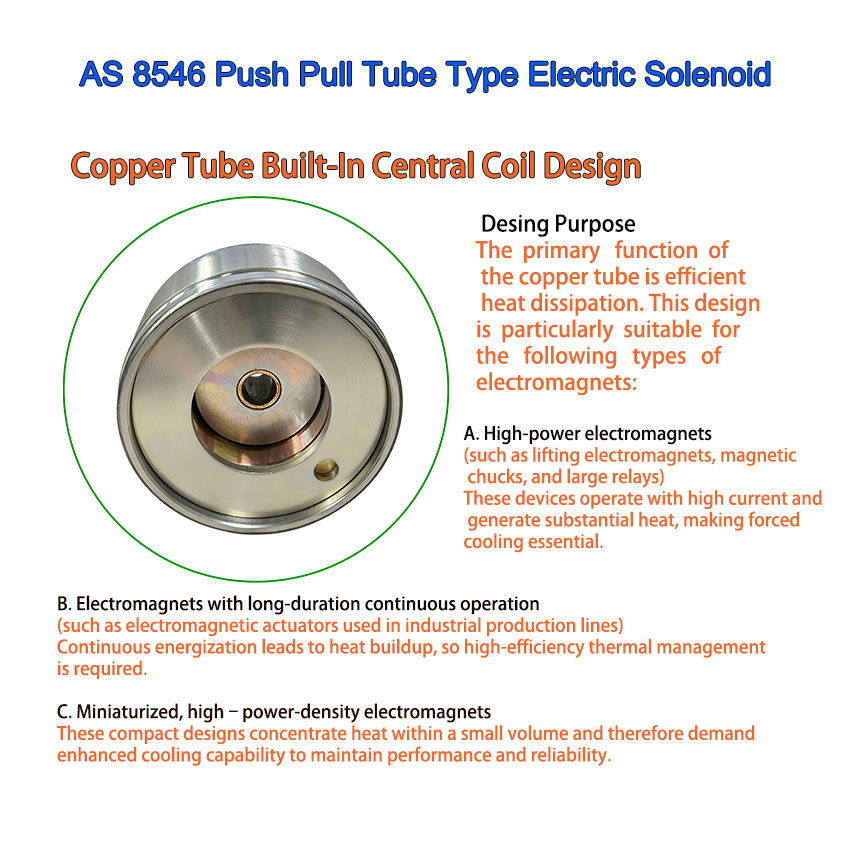
Fixed Pole Piece: It is a stationary ferromagnetic part. It gathers and concentrates magnetic flux. This design boosts the overall working efficiency of the solenoid.
Return Spring (Optional): It is a flexible reset part. It pushes the plunger back to its original position once the power cuts off.
Push Rod: It runs through the fixed pole piece. It transfers internal thrust to external loads to complete pushing tasks.
Key Working Characteristics
Push-pull solenoids stand out for their reliable and efficient performance. They have three core advantages for practical use.
First, they support bidirectional force. One single device can produce both push and pull movement. It saves installation space and reduces equipment costs.
Second, they feature short stroke and high thrust. They generate strong driving force within a limited moving range. They fit scenarios that require powerful but compact motion output.
Third, they offer fast response. They act within milliseconds. This allows continuous, high-speed cyclic operation for automated systems.
Working Principle of Push-Pull Solenoids
The whole working process depends on electromagnetic attraction. Some models adjust motion direction by switching the current polarity. The complete working cycle includes three clear stages.
1. Pulling Action (Retraction)
When the coil connects to power, a closed magnetic flux loop forms. The loop runs through the housing, fixed pole piece and movable plunger. The magnetic force pulls the plunger toward the stationary pole piece. This is the standard pulling motion of a basic solenoid. Meanwhile, it drags the external load connected to the plunger inward.
2. Pushing Action (Extension)
The push rod is firmly fixed on the plunger. It stretches out through the fixed pole piece. When the coil is energized and the plunger retracts inward, the rod extends outward. This movement creates a steady pushing force for external work.
Besides, advanced polarity-reversible models work in a different way. Reversing the current changes the magnetic field polarity directly. It drives the plunger to move outward actively without relying on mechanical linkage.
3. Power-Off and Automatic Reset
The magnetic field disappears right after the current cuts off. For common non-latching solenoids, the return spring takes effect at this time. It pushes the plunger back to its initial position to prepare for the next operation.
In contrast, latching push-pull solenoids use built-in permanent magnets. They can lock their position without continuous power supply. To change the working state, users only need a short reverse current pulse.
Summary
Push-pull solenoids convert electric energy into bidirectional linear motion via electromagnetic principles. Their simple structure, fast response and dual push-pull functions make them ideal for automated control systems. They are widely used in machinery, electronics and industrial automation fields.
Shopping Cart