Product Video
Product Description
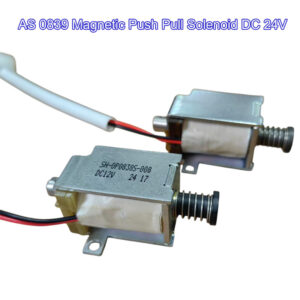
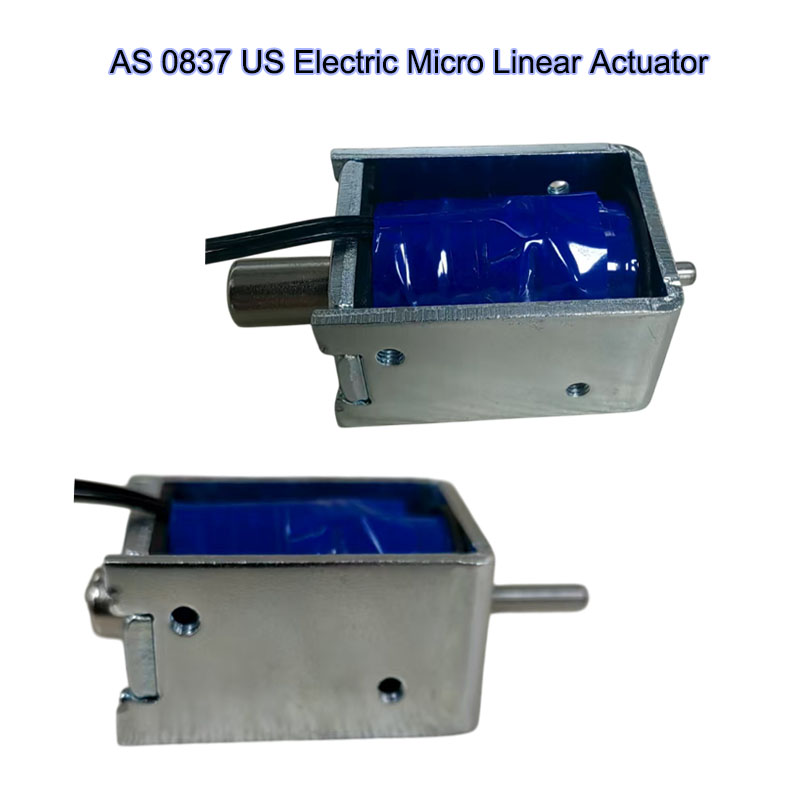
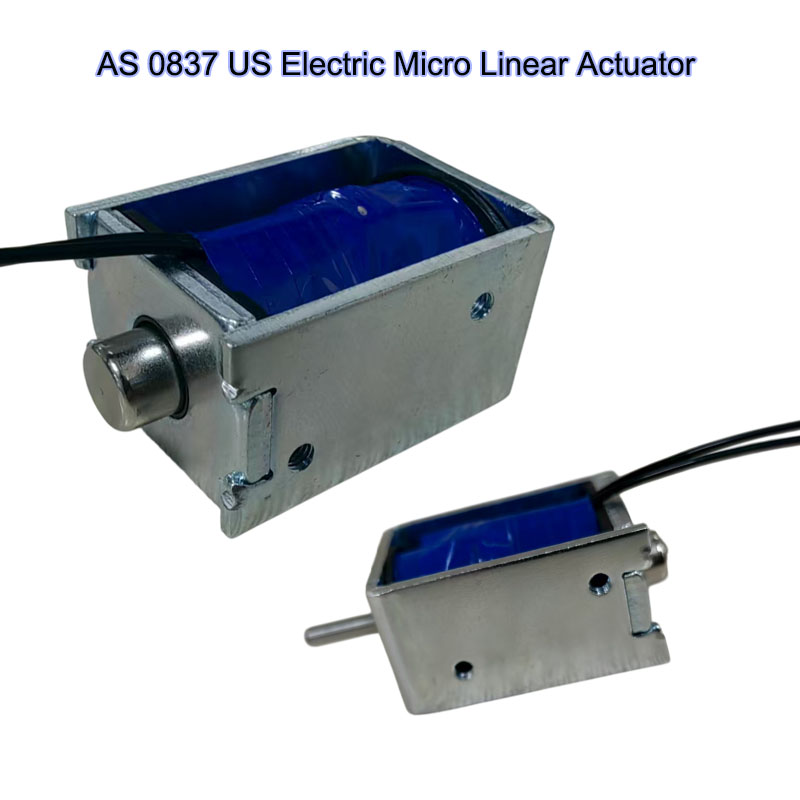
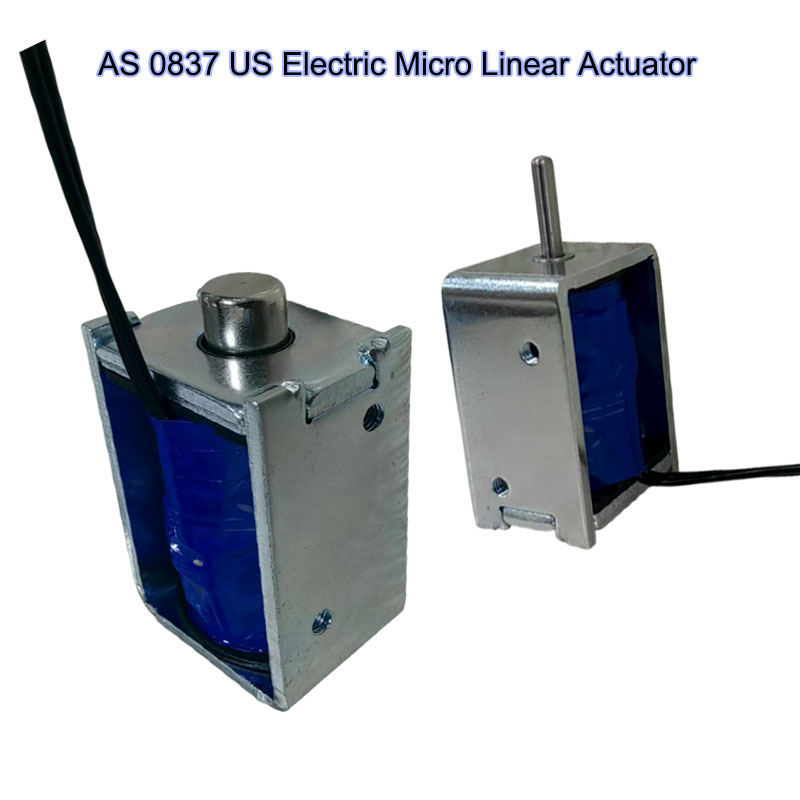
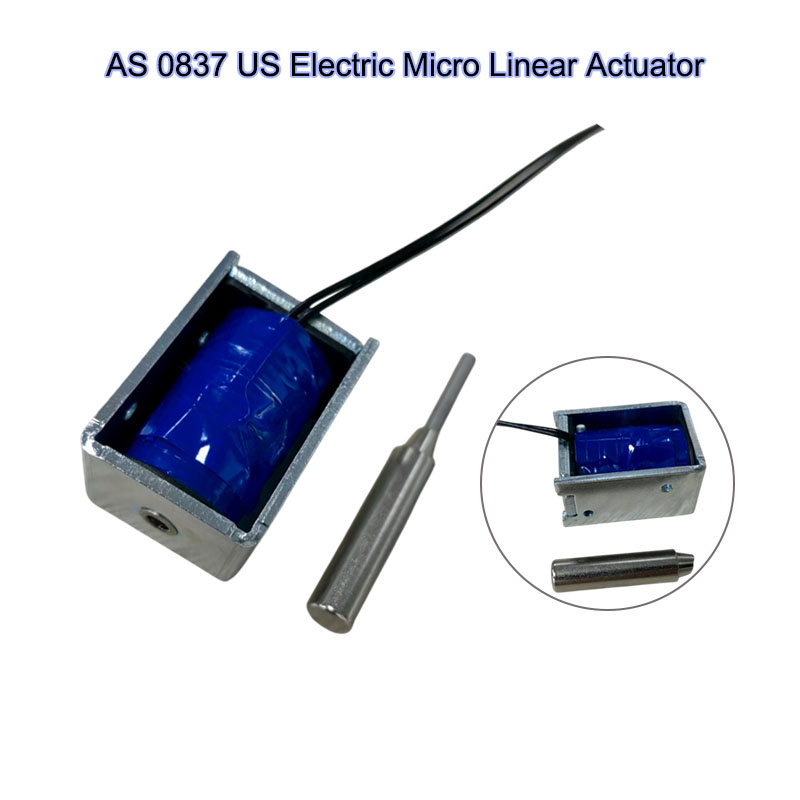
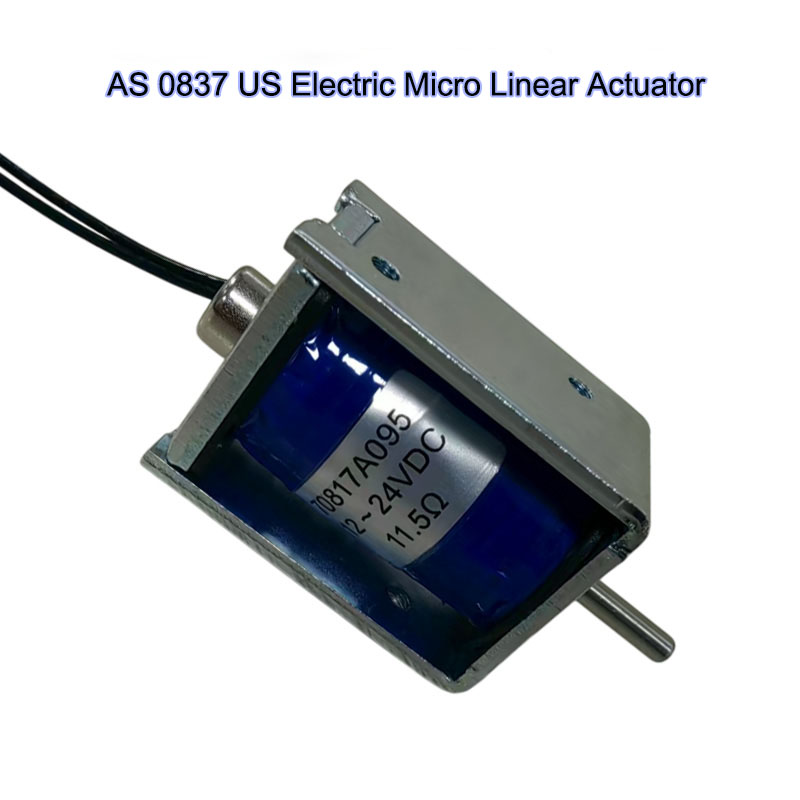
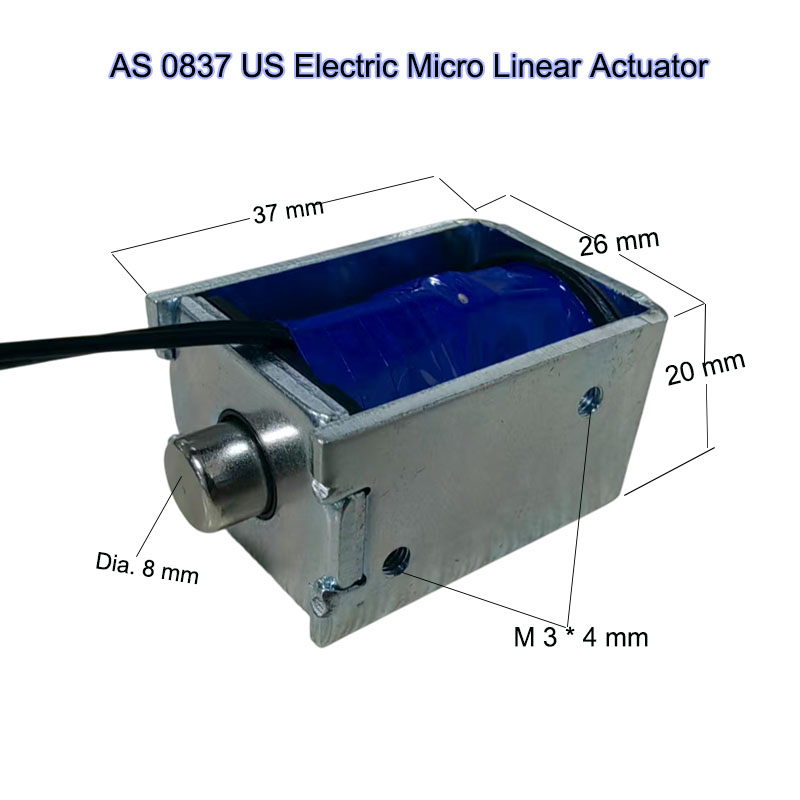
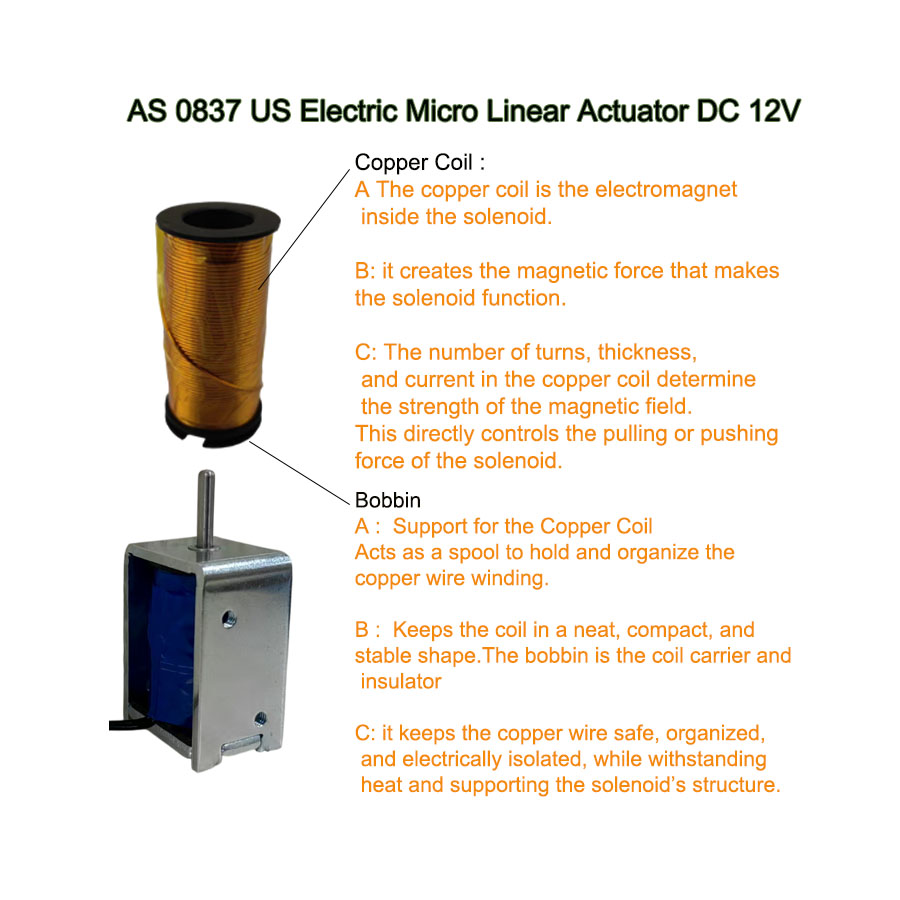
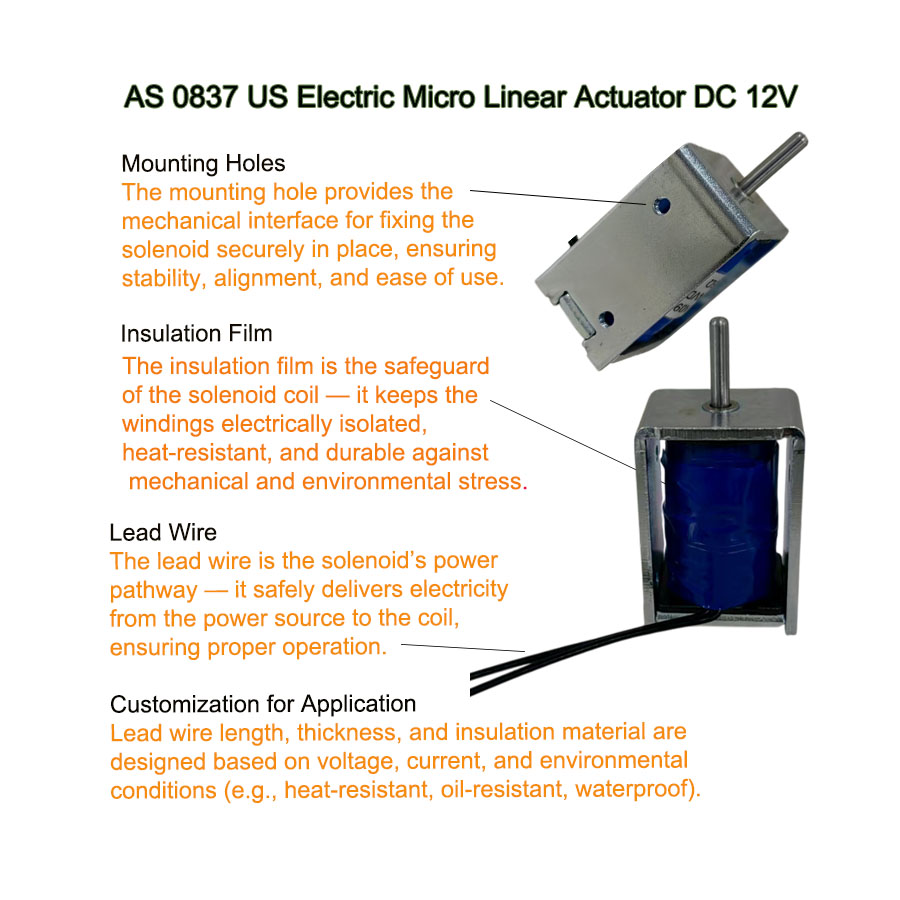
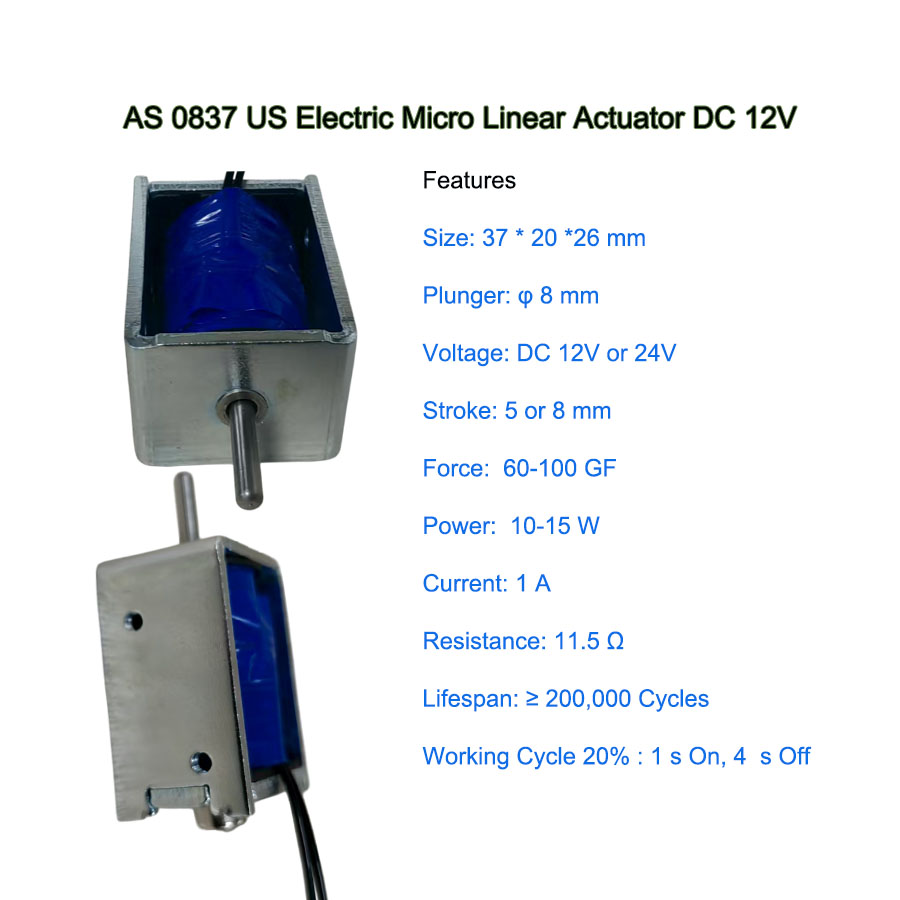
| Brand | AstSolenoid | Model Number | AS 0837 |
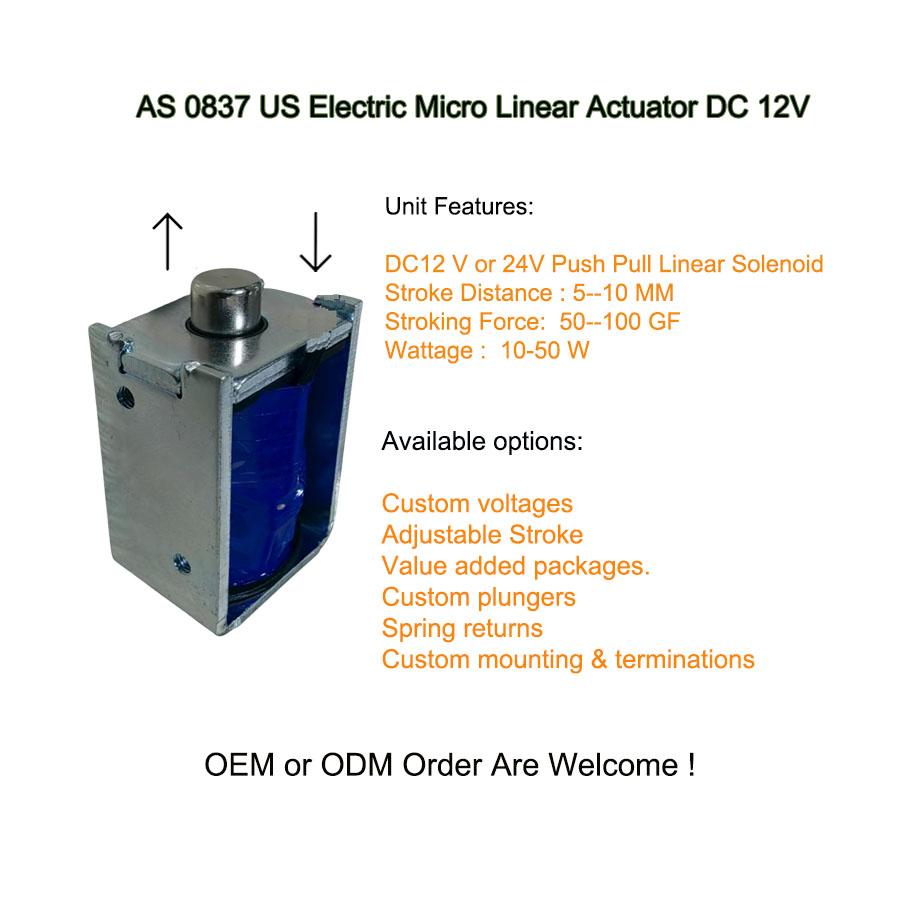
| Rated Voltage (V) | DC12V or 24V | Rated Power(W) | 4-8W |
| Work Mode | Push and Pull | Holding Force (N) | 0.1–1.5 N |
| Stroke(mm) | 3-6 MM Customized | Reset Time(s) | 1 S On,3 S OFF |
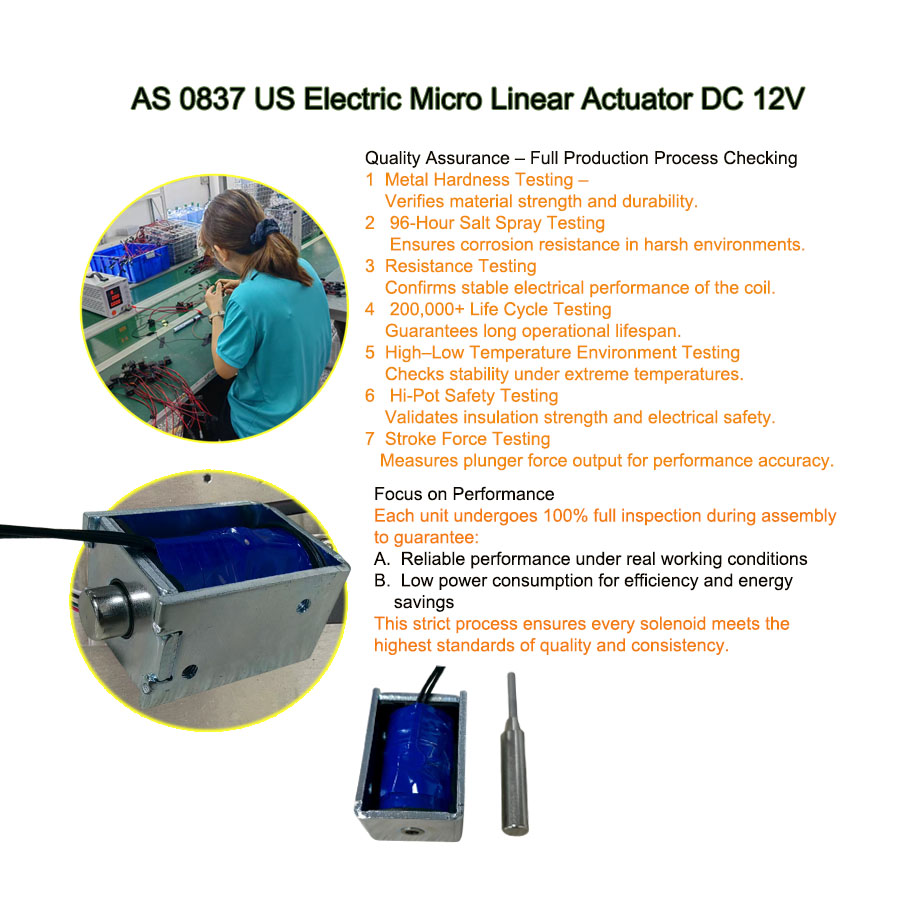
| Service Life | 200 Thousand Times | Certification | CE,ROHS,ISO9001, |
| Material | Superior Magnet Iron | Lead Wire Length(mm) | 200 MM |
| Install Style | Screw | Tolerance of Dimension | +/- 0.1 MM |
| Water-proof | None | Insulation Class | B |
| Hi-Pot Test | AC 600V 50/60Hz 2s | Non-excitation Holding Force | 0 |
| Working Temperature | -10°C-100°C | Duty Cycle | 1-100% |
| Thread Depth(mm) | / | Payment Term | TT, or LC At Sight |
| Sample Order | Yes | Warranty | 1 Year |
| MOQ | 1000 pcs | Supply Ability | 5000 pcs per Week |
| Delivery Time | 30 Days | Port of Loading | shenzhen |
Electromagnetic solenoid door locks work through the interaction of an electromagnet and an armature plate, hence being reliable door locks. The solenoid coil, when excited with an electric current, develops a magnetic field depending on the strength of the electric current. The magnetic field then attracts the armature plate, hence locking the door.
The armature plate, consisting of a ferromagnetic material, is placed opposite the electromagnet. Upon the activation of the electromagnet, the magnetic pull attracts the armature plate, thus locking the door. However, unlocking the door is achieved when the current flow is interrupted. This switch control system ensures quick and reliable locking and unlocking, making electromagnetic locks extremely efficient and reliable in high-security areas.
Types of Electromagnetic Door Locks
There are various electromagnetic lock designs available, each suited to a specific application or requirement.
These electromagnetic locks provide a constant magnetic holding power as long as the flow of current is maintained. These electromagnetic locks are ideal when it comes to standard access control applications, as they keep the door locked until it is physically unlocked by someone.
Fail-safe locks feature an automatic unlocking system in the event of a power outage, which is an important safety feature in the case of an emergency, such as a fire or power failure.
Fail Secure Locks, on the other hand, remain locked when the power goes out. This makes them ideal to be used in secured zones, where the requirement is to ensure that the door is locked even when the power is out.
Adjustable force models can be found as well.
The ability to fine tune the magnetic force enables a level of adaptable security that can be adjusted according to the context as well as the needs of the individual using the device.
Electromagnetic solenoid door locks have applications in different situations where access control and security are of great importance.
They are also used in corporate office buildings to control the entry and exit points for employees and guests.
These are used by financial institutions to protect restricted areas such as the vaults and cash handling areas.
They are used by health facilities to control access to drug storage rooms as well as laboratories.
They are also used in learning institutions to regulate entry into classrooms and laboratories.
They’re also great for high-traffic environments where quick and reliable door operation is a requirement. If connected with the access control system, electromagnetic locks can restrict access only to authorized people, thus enhancing security and facilitating operations.
FAQ – Electromagnetic Solenoid Door Locks
1. How does the electromagnetic solenoid door lock work?
The lock operates by the passage of electric current through a solenoid coil, producing a magnetic field. The magnetic field pulls the armature plate, resulting in a locked position. The door unlocks when the power is switched off.
2. What is the function of the armature plate?
The armature plate is a ferromagnetic material that responds to the electromagnet. When it is energized, it is attracted very strongly to the coil, keeping the door shut. When the power is released, it opens the door.
3. What are the various types of electromagnetic locks?
Constant Electromagnetic Locks: These locks have a constant magnetic holding force.
Fail-Safe Locks: Unlock automatically when the power is off. This is great for emergencies.
Fail-Secure Locks: These locks will remain locked even during a power failure, so they are useful in high security applications.
Adjustable Force Locks: These locks enable you to adjust the magnetic force.
4. Where are electromagnetic locks usually located?
They are often used in:
Company headquarters, for handling entrance and exit.
Financial institutions, including vaults and safe rooms.
Hospitals, including drug storage areas and laboratories.
Schools, classrooms, and laboratories.
Any location that is highly traversed that requires restricted access.
5. Can electromagnetic locks be integrated with access control systems?
Definitely. They can be operated using key cards, keypads, biometric scanners, and remote controls. This ensures only authorized persons gain access.
6. Are electromagnetic locks dependable in case the power fails?
It depends on the lock:
Fail-safe locks are intended to unlock automatically to ensure safe exit in the case of an emergency.
On the contrary, fail-secure locks would remain locked, emphasizing security.
7. What is the process for selecting the correct electromagnetic lock?
Consider:
The level of security you need.
If you have a steady power supply.
The door’s size and material.
Whether you want fail-safe or fail-secure. How well it will interface with your access control solution.