
Chapter 1 : Introduction
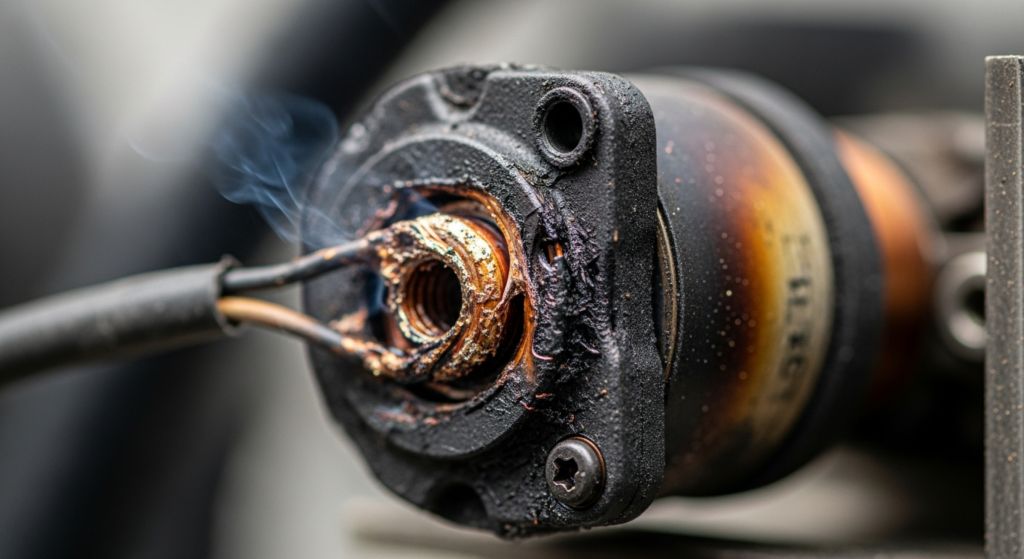
The phenomenon of quick heating and the simultaneous loss of magnetic force is a major problem that affects DC Solenoid. This not only affects their performance but also leads to fire hazards, quick aging of materials, and damage to the equipment. Both users and developers need to comprehend the underlying causes of this problem and take the necessary steps to eliminate it.
Chapter 2 : Why Do DC Solenoid Lose Force and Overheat?
Primary Causes of Overheating
- 1. Electrical Issues
Circuit Issues: Unstable voltages, faulty wiring, and power interruptions can lead to an overload situation.
Excessive Current: When the resistance of the wire is low compared to the applied voltage.
High Voltage: When the applied voltage is high, the electromagnet overheats due to excessive holding current.
2.2. Mechanical Issues
Excessive Loading: When the DC solenoid is overloaded or subjected to excessive duty cycles.
Physical Damage: When the DC Solenoid suffers from physical damage due to excessive movement.
2.3. Thermal Management Issues
Inadequate heat dissipation due to a faulty cooling system or blocked ventilation channels.
High Ambient Temperatures: When the ambient temperature is high compared to the designed temperature.
2.4. Design Issues
Undersized Components: When the electromagnet’s coil, wire, or core are undersized.
Material Issues: When the materials are of inferior quality and have high eddy currents.
Chapter 3: Troubleshooting Solenoid Overheating Issues
Quick Remedial Actions to Be Undertaken
3.1. Electrical System Issues
Checking the integrity of the wiring and the presence of any corrosion.
Ensure that the gauge of the wire is appropriate to the specifications.
Verify the stability of the voltage supply.
Measure the current against specifications.
3.2. Evaluation of the Load
If possible, reduce the mechanical load.
Ensure that the electromagnet is correctly sized.
If applicable, consider the need for intermittent or continuous operation.
3.3. Improvement of the Thermal Management
Improve the ventilation around the electromagnet.
Ensure that dust is cleaned off the surfaces.
Consider the need to install additional cooling systems.
Ensure that there is adequate time allowed for the cooling cycle.
3.4. Environmental Factors
Ensure that the equipment is not located in areas that are too hot.
Ensure that there is adequate space around the electromagnet.
Ensure that the variations in the ambient temperatures are monitored.
3.5. Evaluation of the Components
Ensure that the coils are replaced if damaged.
Ensure that the plunger and the core are inspected.
Ensure that the insulation is adequate.
Important Design Factors
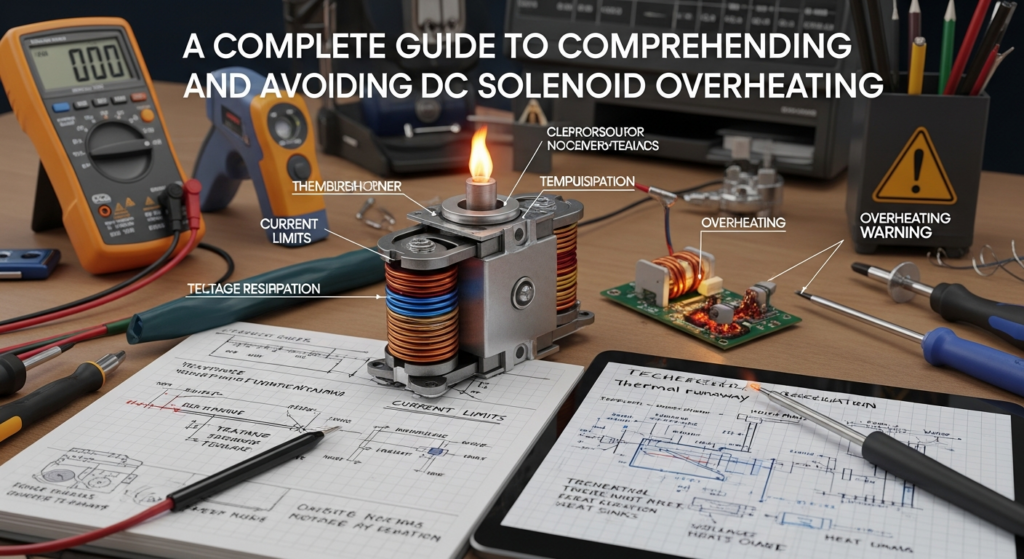
Chapter 4: Overheating Prevention Design Principles
4.1. Adequate Dimensions and Details
Ensure that the force is calculated.
Ensure that the duty cycle is considered.
Ensure that the worst-case environmental factors are considered.
Ensure that the correct insulation class is selected.
Ensure that the correct gauge is selected.
4.2. Integration of Thermal Management
Ensure that the heat dissipation paths are integrated into the design.
Ensure that the materials selected have adequate thermal conductivity.
Ensure that forced-cooling is integrated into the design.
Ensure that there is adequate surface area.
4.3. Optimization of the Electrical System
Ensure that the system is designed to include resistors.
Ensure that the holding current is reduced by using PWM.
Ensure that adequate materials are selected.
Ensure that adequate protection is integrated into the design.
4.4. Design of the Mechanical System
Ensure that the mechanical system is minimized.
Make sure that the alignment is proper to avoid binding.
To avoid hammering, the stroke length must be properly set.
Use excellent bearings and low friction materials
Chapter 5: Frequently Asked Questions
Q1: What temperature is too high for a DC solenoid?
A: The temperature of the coils of a DC Solenoid must be kept below the insulation class rating. The rating for Class B is 130 degrees C, and for Class F, the rating is 155 degrees C. A surface temperature of over 70 degrees C will cause early aging and burn the electromagnet.
Q2: Is it easy to avoid heating by using a DC Solenoid with a higher voltage at a lower voltage?
A: It is not necessarily easy to avoid overheating of the electromagnet by using an electromagnet that has a higher voltage at a lower voltage. It would reduce the magnetic force in the same manner.
Q3: How is heating affected by duty cycle?
A: The duty cycle has a significant effect on the accumulation of heat in an electromagnet. When the electromagnet is in continuous operation, different considerations must be made in the design.
Q4: What are the signs of impending coil failure?
A: The signs of impending failure of the electromagnet include a strong stench, discoloring, broken insulation, and a reduction in magnetic force.
Q5: Can overheating be totally avoided?
A: It is not possible to totally avoid overheating of the Solenoid. However, proper design and application will prevent overheating within safe limits.
Chapter 6 : Design Checklist to Avoid Common Pitfalls
Pre-Design Considerations
Provide precise force requirements and safety factors.
Calculate the true duty cycle, not just the maximum.
Identify the environmental conditions.
Determine the expected lifespan and maintenance requirements.
Phase of Design
Select the proper insulation class and gauge of the wires.
Calculate the thermal dissipation requirements.
Include cooling features.
Include devices to provide thermal protection.
Design for low friction and proper plunger alignment.
Validation and Testing
Perform thermal testing under the worst conditions.
Verify force output at various temperatures.
Perform lifespan tests with accelerated aging.
Verify efficiency of the cooling system.
Production and Quality Assurance
Use good winding techniques.
Verify heat transmission via vacuum potting or impregnation.
Verify resistance and integrity of each item.
Use proper handling techniques to avoid pre-delivery damage.
Chapter 7 : In conclusion
The problem of Solenoid overheating is a complex issue that requires the designer to consider various factors. Through proper troubleshooting techniques, design considerations, and best design practices, it is possible to reduce or completely remove the problem of overheating. The reactive approach to the problem of electromagnet overheating is less effective compared to using proactive approaches such as proper design considerations.
To learn more about designing your DC solenoids, please contact with our project engineers. Our engineering team will outline the important criteria to consider for proper electromagnet design and selection.
Key Takeaway: A comprehensive approach to design, from the outset to operation, is crucial to successful Solenoid deployment.