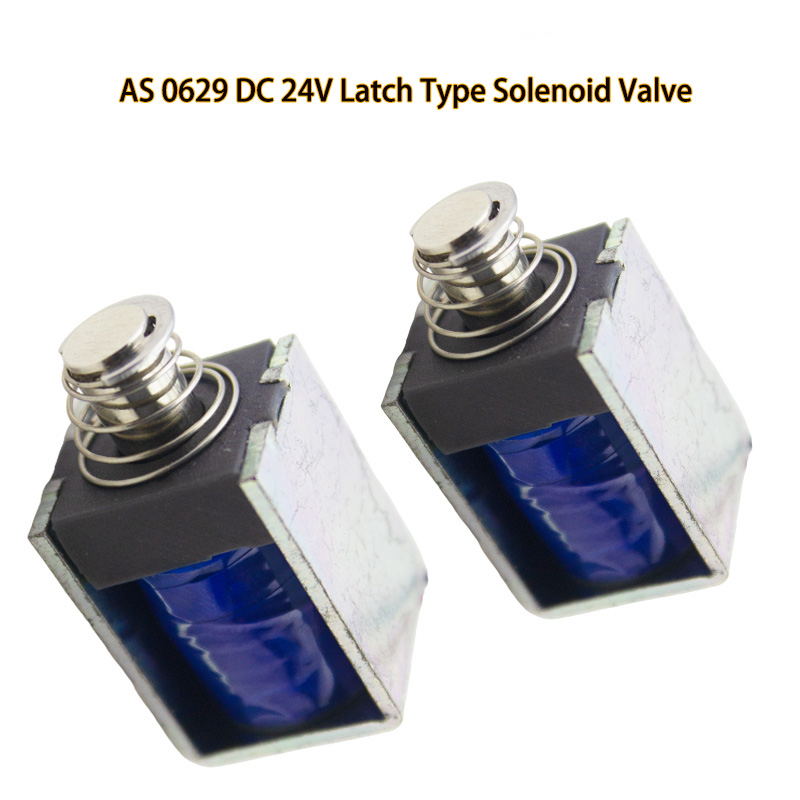
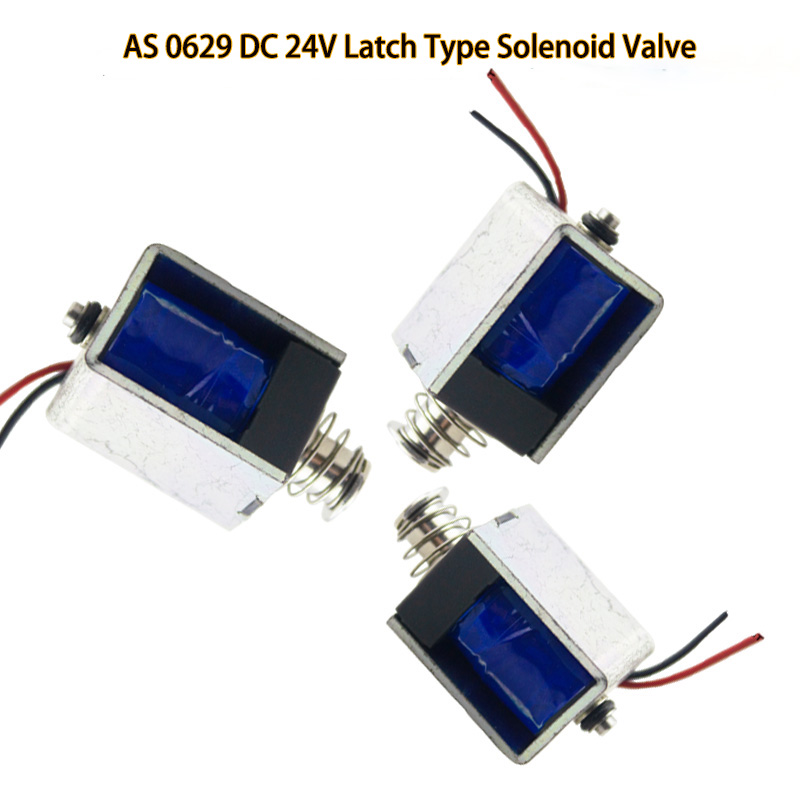
Product Video
Product Specification
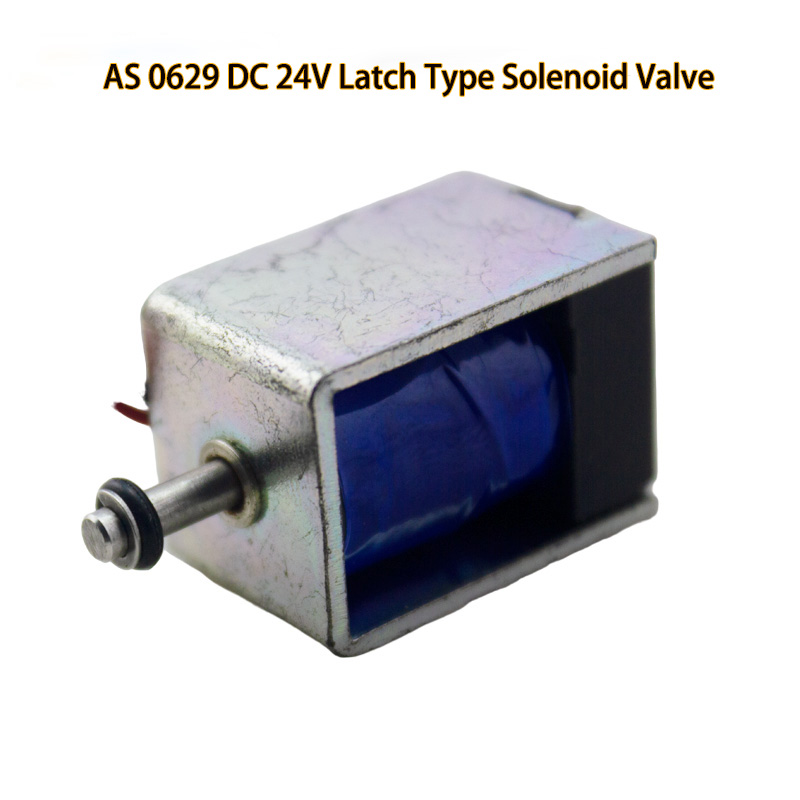
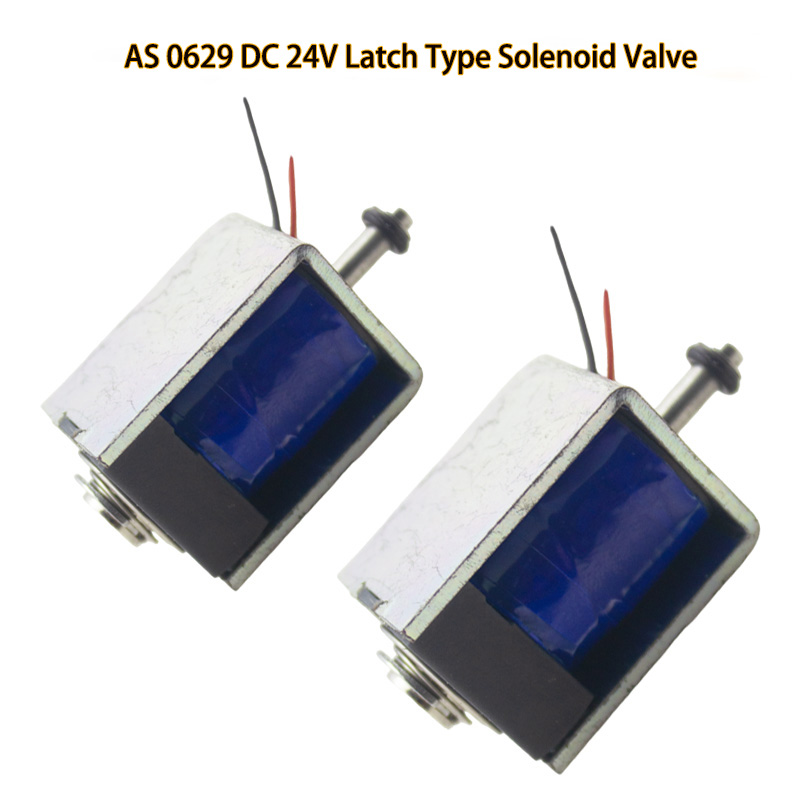
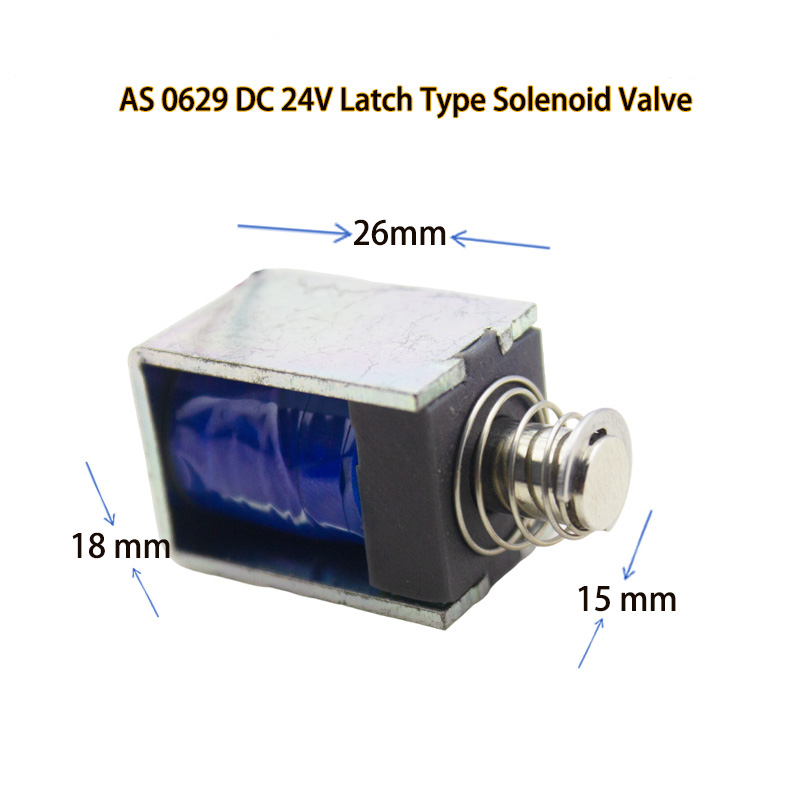
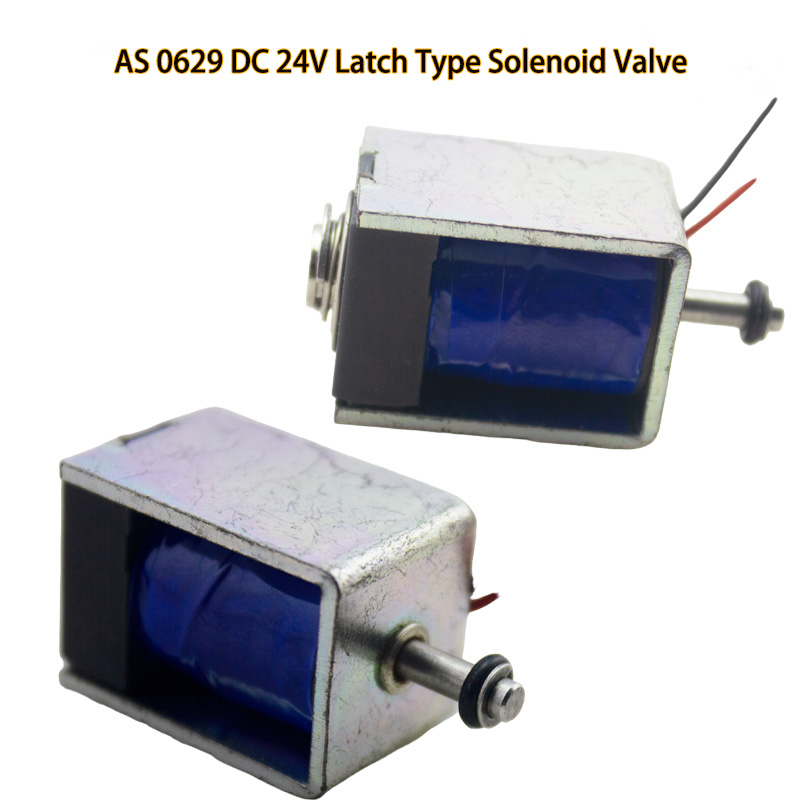
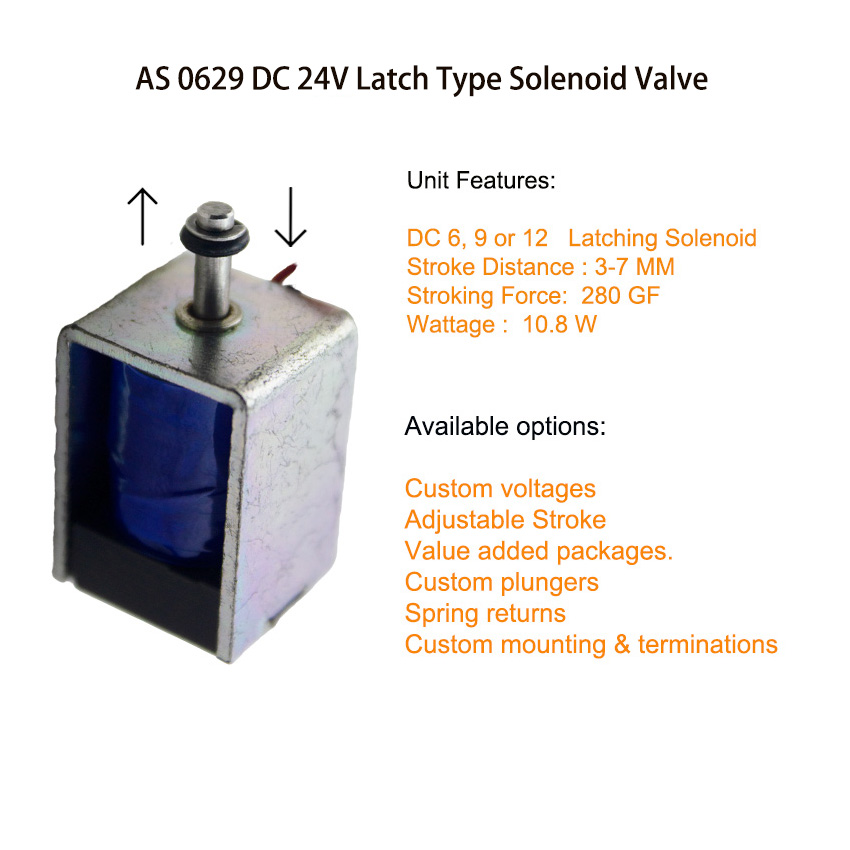
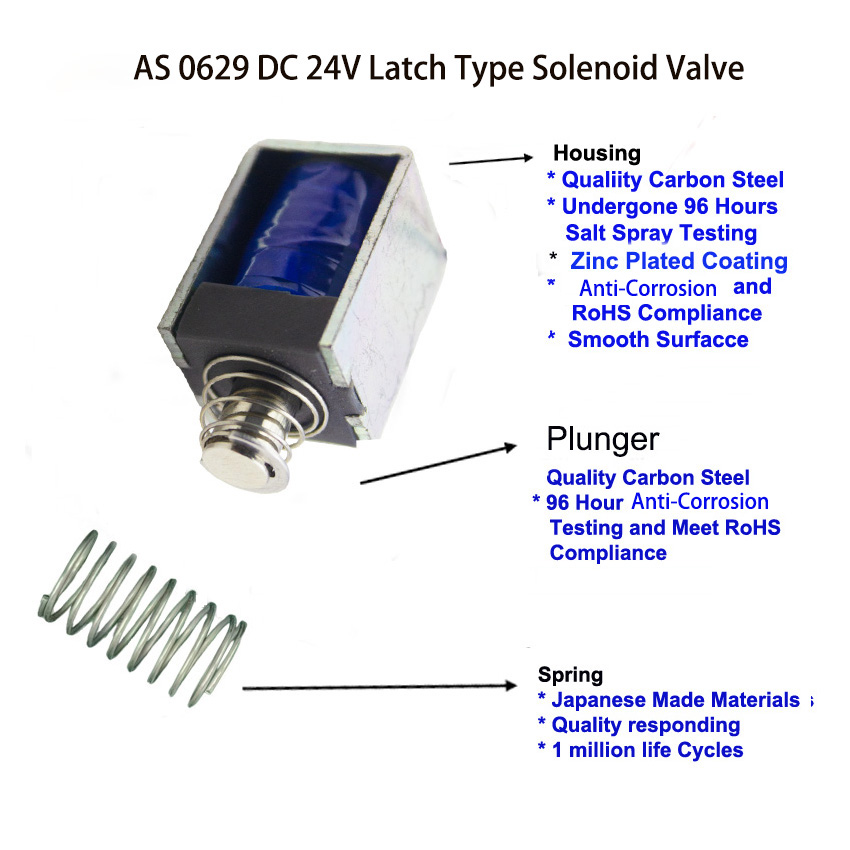
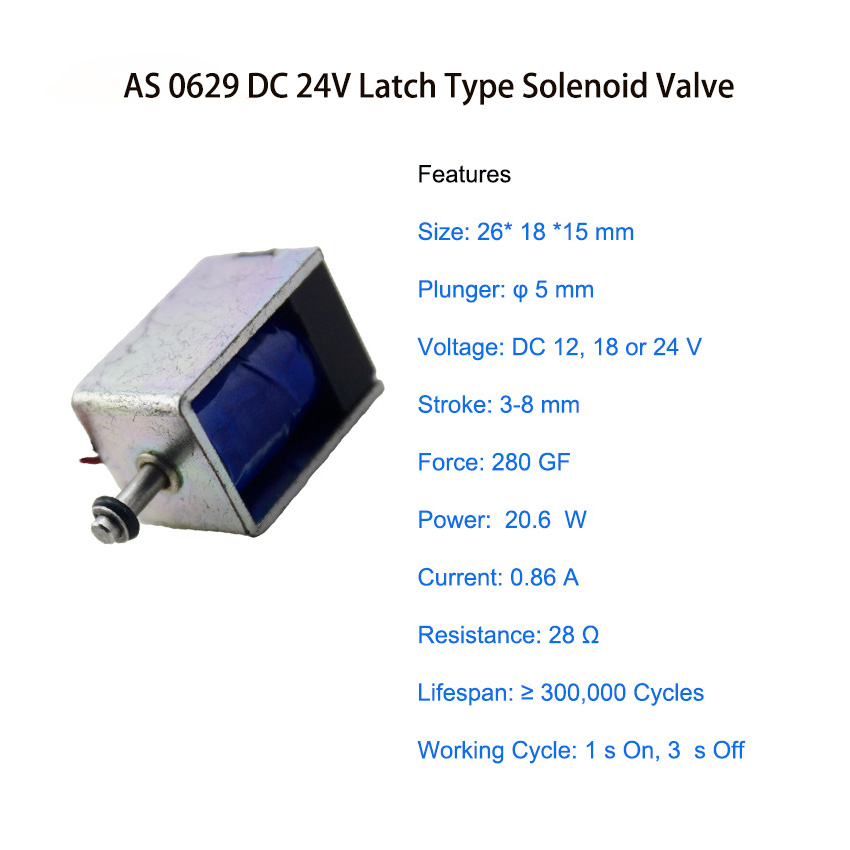
| Brand | AstSolenoid | Model Number | AS 0629 |
| Rated Voltage (V) | DC 24V or DC 12V | Rated Power(W) | 16 W |
| Work Model | Pull Push Type | Holding Force (N) | 4-11 N |
| Stroke(mm) | 4-8 MM Customized | Reset Time(s) | 0.2 |
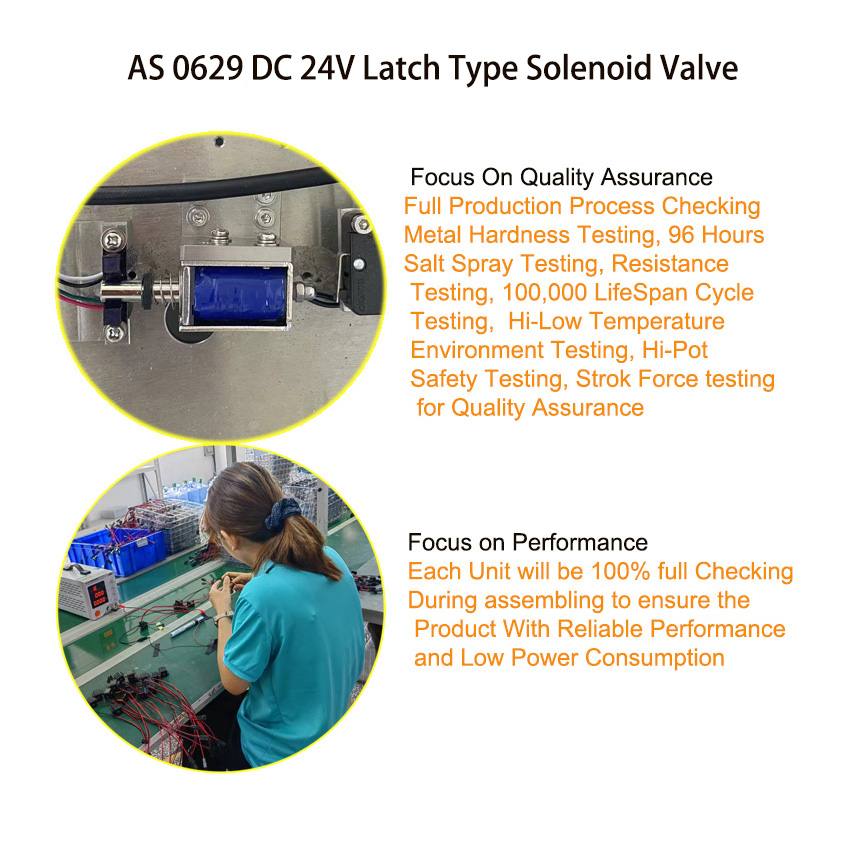
| Service Life | 500 Thousand Times | Certification | CE,ROHS,ISO9001, |
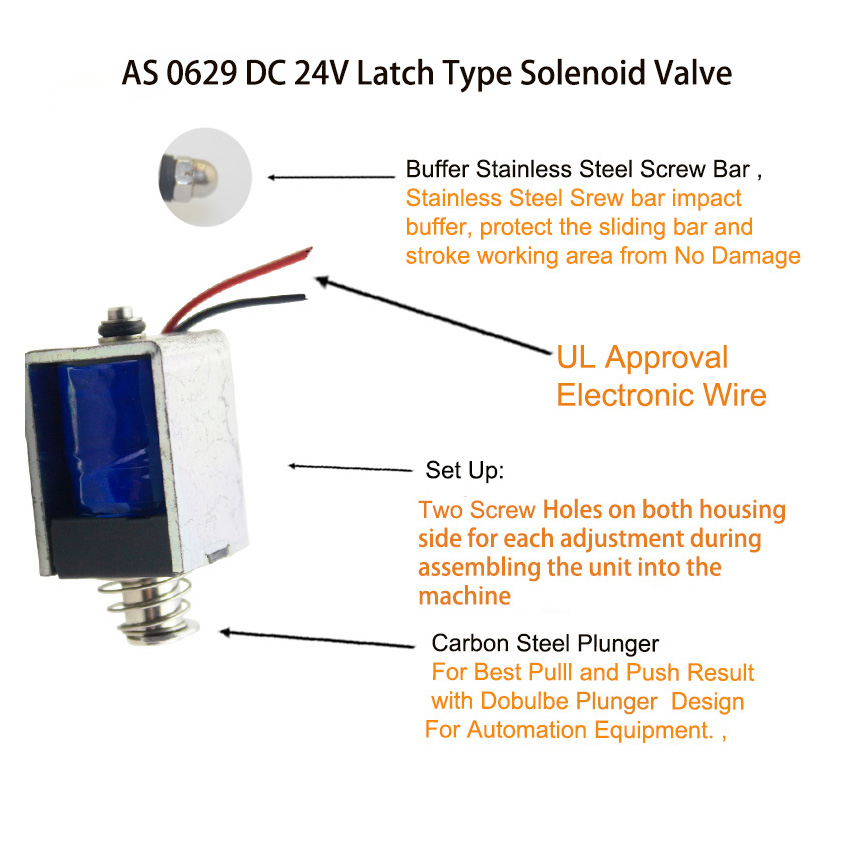
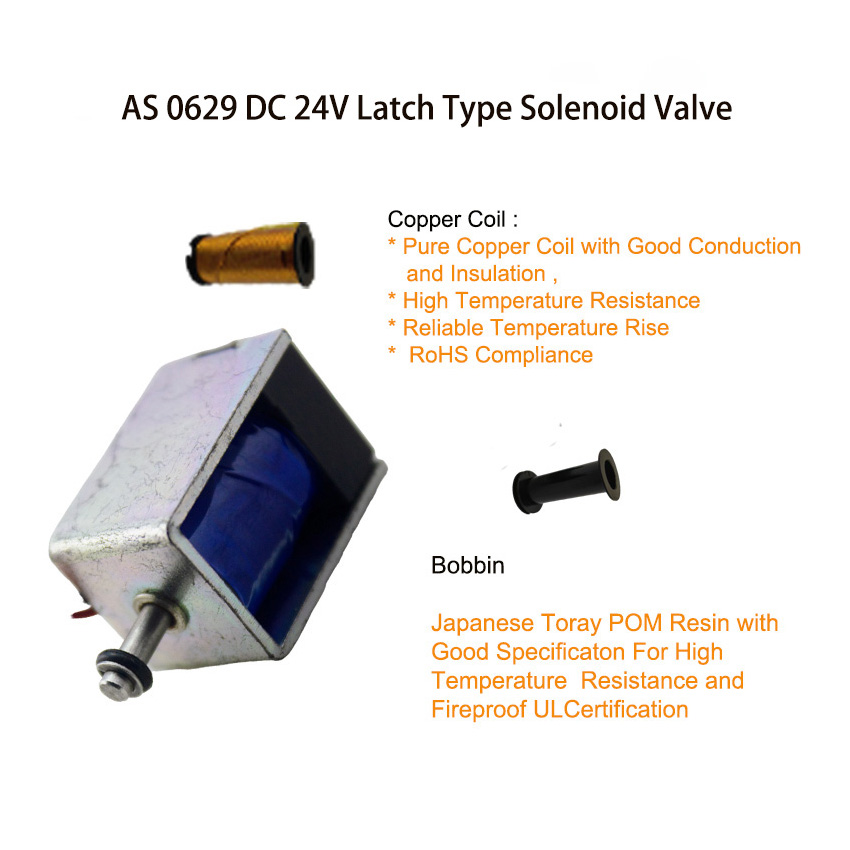
| Material | Superior Magnet Iron | Lead Wire Length(mm) | 200 MM |
| Install Style | Screw | Tolerance of Dimension | +/- 0.1 MM |
| Water-proof | None | Insulation Class | B |
| Hi-Pot Test | AC 600V 50/60Hz 2s | Non-excitation Holding Force | 0 |
| Working Temperature | -10°C-100°C | Duty Cycle | 1-100% |
| Thread Depth(mm) | / | Payment Term | TT, or LC At Sight |
| Sample Order | Yes | Warranty | 1 Year |
| MOQ | 1000 pcs | Supply Ability | 5000 pcs per Week |
| Delivery Time | 30 Days | Port of Loading | shenzhen |
Product Detailed Description
Latching Solenoid Driver vs. Standard Form/Boxing Solenoid Driver
| Feature | Budget Latching Solenoid Circuit | Standard Form/Boxing Solenoid Driver |
|---|---|---|
| Power Consumption | Very low (only pulses required) | High (continuous power to hold position) |
| Heat Generation | Minimal | Significant (requires heatsinking) |
| Circuit Complexity | Simple (fewer components) | More complex (needs current regulation) |
| Cost | Low ($5-15 in components) | Higher ($20-50 with heatsink) |
| Control Method | Momentary pulse (toggle) | Continuous signal (hold) |
| Ideal For | Battery-powered apps, low-duty cycle | High-force, continuous holding |
| Wiring | 2 wires for bipolar, 3 for unipolar | 2 wires (simple but power-hungry) |
| Microcontroller | Easy interfacing (one GPIO per coil) | May need MOSFET/relay driver |
Advantages of the AS0629 Latching Design:
It sips power, drawing current only during brief state changes of less than 100 milliseconds. This makes it a perfect fit for battery and solar-powered systems.
Heat generation is a non-issue. Because there’s no continuous coil current, thermal management is unnecessary, even in sealed enclosures.
Its compact, often potted construction is space-efficient, allowing it to be used where traditional solenoids simply won’t fit.
The valve’s state is remembered, even during power outages, eliminating the need for backup power.
Operation is silent. There’s no hum or buzz, just the sound of the switching clicks.
It can handle a high duty cycle, remaining actuated indefinitely without overheating or draining power.
Disadvantages / Considerations:
The initial cost is higher. The more intricate internal mechanism drives up the unit price.
The drive electronics are complex. It requires a pulsed bipolar current or H-bridge driver, not a simple on/off switch.
Position feedback is often necessary. An additional sensor is frequently needed to confirm the valve’s state after power-up.
Lower Initial Force – The peak force might be less than that of a continuous solenoid of the same size, thanks to the way it’s powered.
Potential Unlatching from Vibration – In environments with a lot of vibration, the mechanical latches could come undone.
Limited Speed – The switching time might be slower than that of direct-acting continuous solenoids.
FAQ: AS0629 Compact DC 24V Latch-Type Solenoid Valve
Q1: What does “latch-type” mean for this solenoid valve?
A1: “Latch-type” means the valve changes state (open/closed) with a brief power pulse, and then it stays in that position, either magnetically or mechanically, without needing continuous power. A second pulse switches it back.
Q2: How much power does it actually save compared to a standard valve?
A2: The power savings are significant. A standard 24V valve that draws 5W continuously would consume 120Wh over a 24-hour period.
The AS0629 consumes a mere 5W for a fleeting 0.1 seconds per switch, translating to roughly 0.00014Wh per cycle. This makes it essentially costless to maintain its position.
Q3: Can I directly control it with a microcontroller GPIO pin?
A3: No, a driver circuit is necessary. The valve demands a quick bipolar pulse, which dictates the direction, or a pulse to one of its two coils. A straightforward H-bridge driver, such as an L298N, controlled by MCU GPIO pins, is the typical approach.
Q4: Is it suitable for controlling liquids, or is it limited to air and gas?
A4: The AS0629 is compatible with both liquids and gases, provided the media is appropriate. Consult the valve’s specifications for pressure ratings, media compatibility (considering materials like brass, stainless steel, and Viton seals), and the temperature range suitable for your specific application.
Q5: What occurs if power is lost while the valve is engaged?
A5: It remains in its last position, effectively latched.
This design offers a reliable way to keep the system’s state intact. However, if the system’s status is uncertain when power returns, a sensor might be necessary to confirm its position.
Q6: Why is it considered “space-saving”?
A6: The latching mechanism enables a smaller electromagnetic coil and a more efficient internal design. This results in a more compact housing compared to similar force-open frame solenoids, which require larger coils for continuous operation.
Q7: Is this suitable for high-cycle applications?
A7: Yes, it can be used, but you should take the mechanical lifecycle rating (often measured in millions of cycles) into account. Also, make sure your driver circuit can provide clean, well-timed pulses at the needed frequency without causing the coil to overheat.
Q8: Can it be powered by both DC and AC?
A8: The AS0629 is designed for DC 24V. Using AC power will not function properly and could cause damage. For AC applications, you’ll need a different model or an AC-to-DC power supply.