,

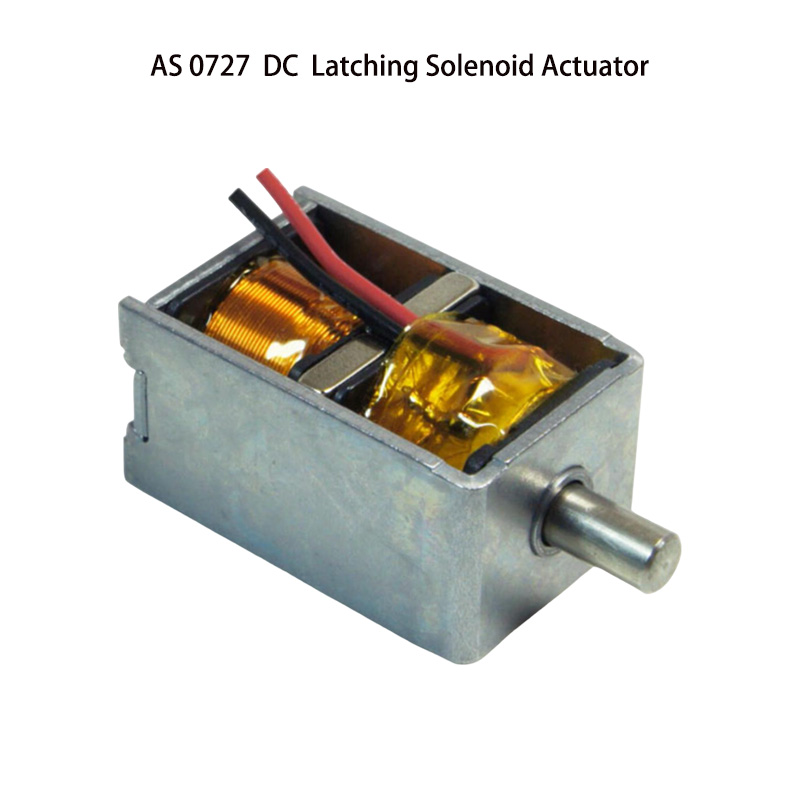
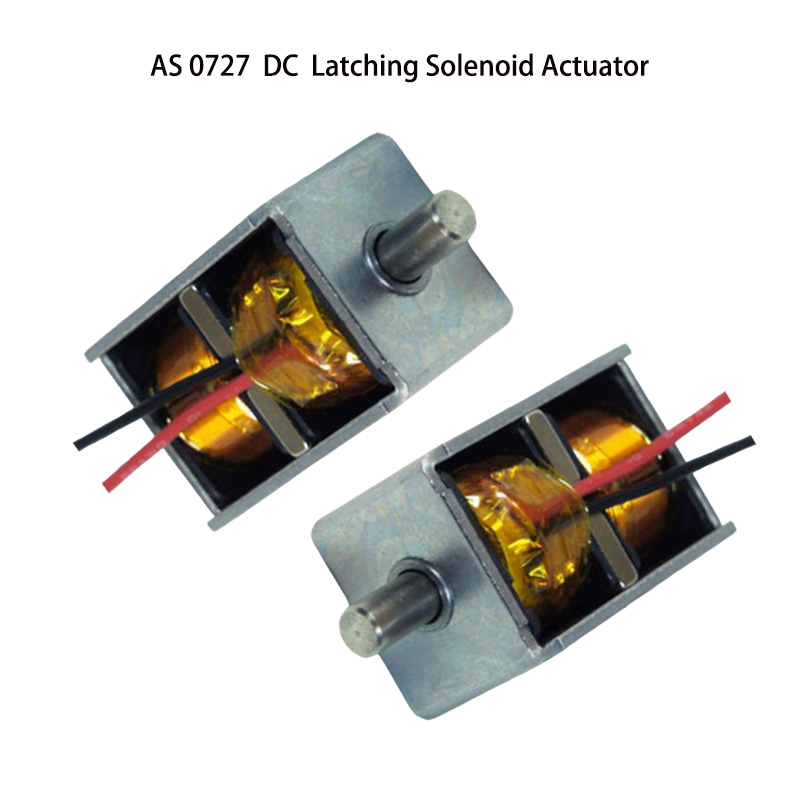
AS0727 DC Latching Solenoid Actuator | Energy-Saving Linear Motion for Efficient Industrial Automation

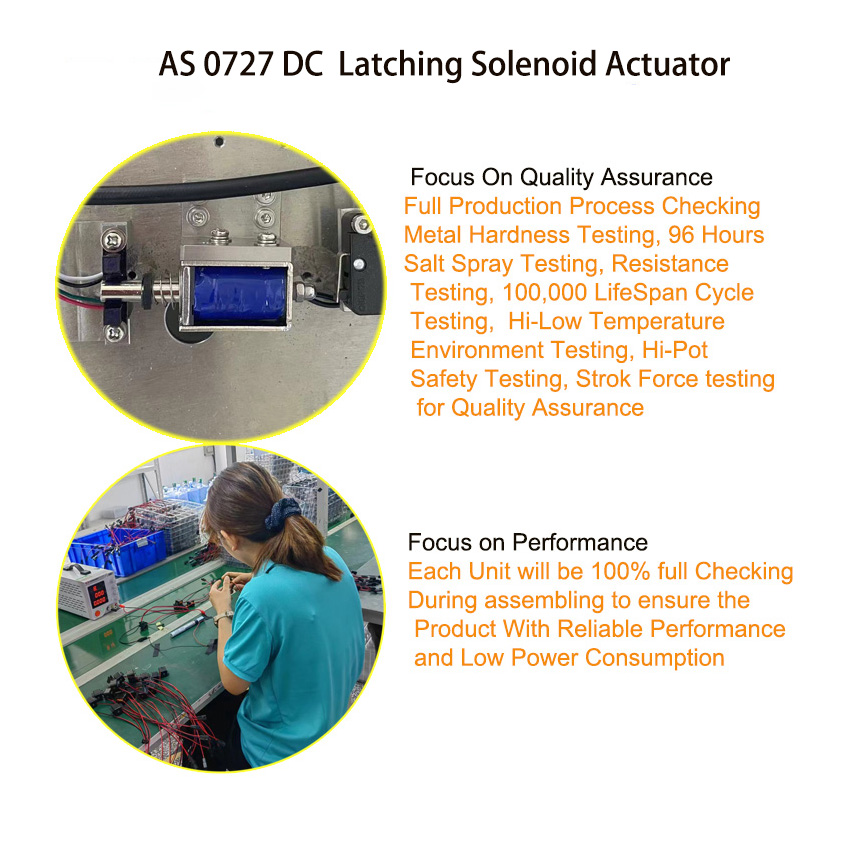
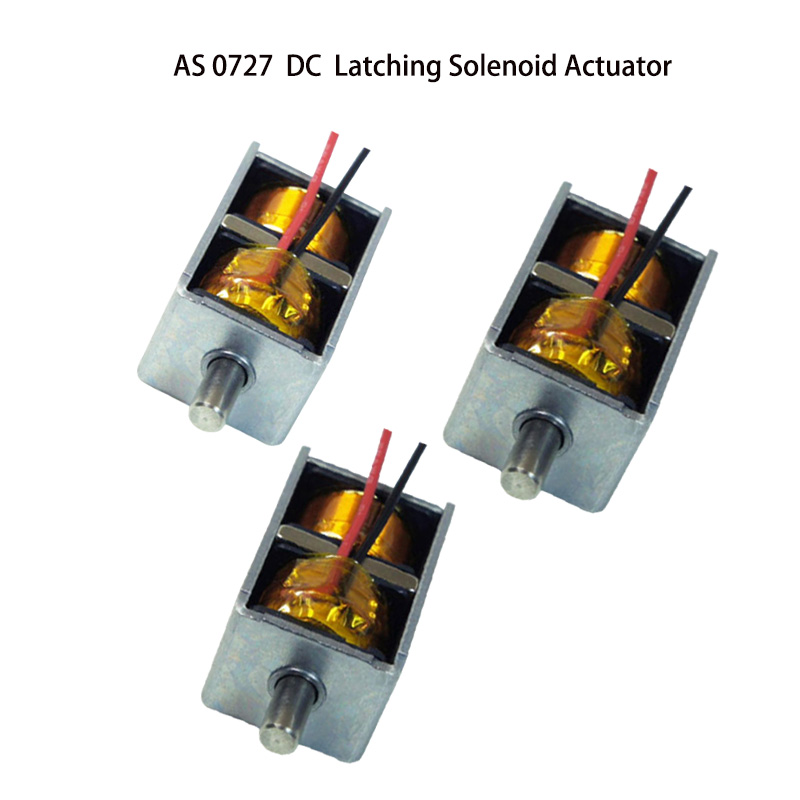
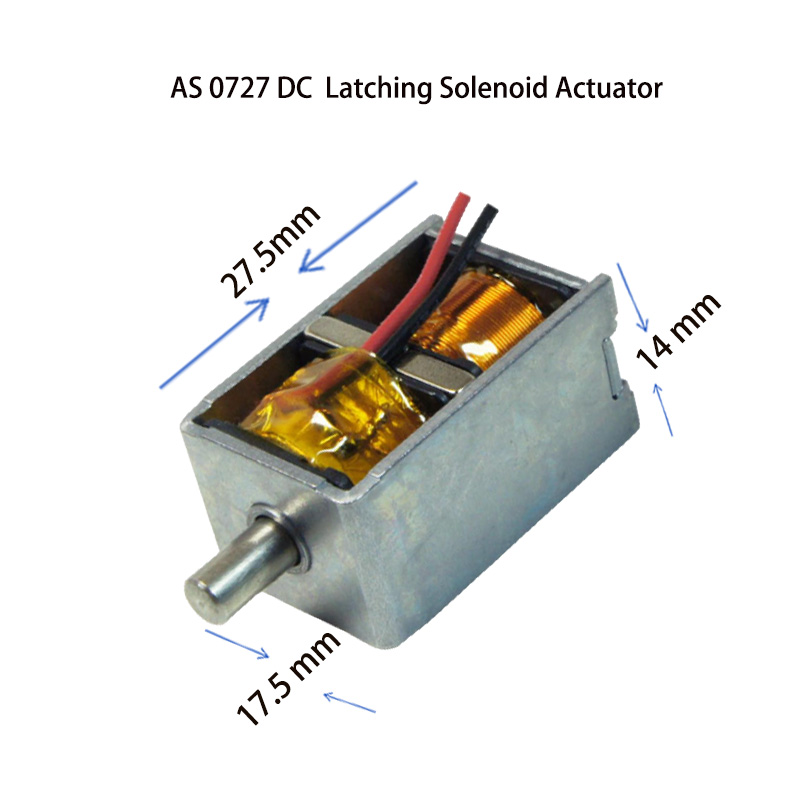
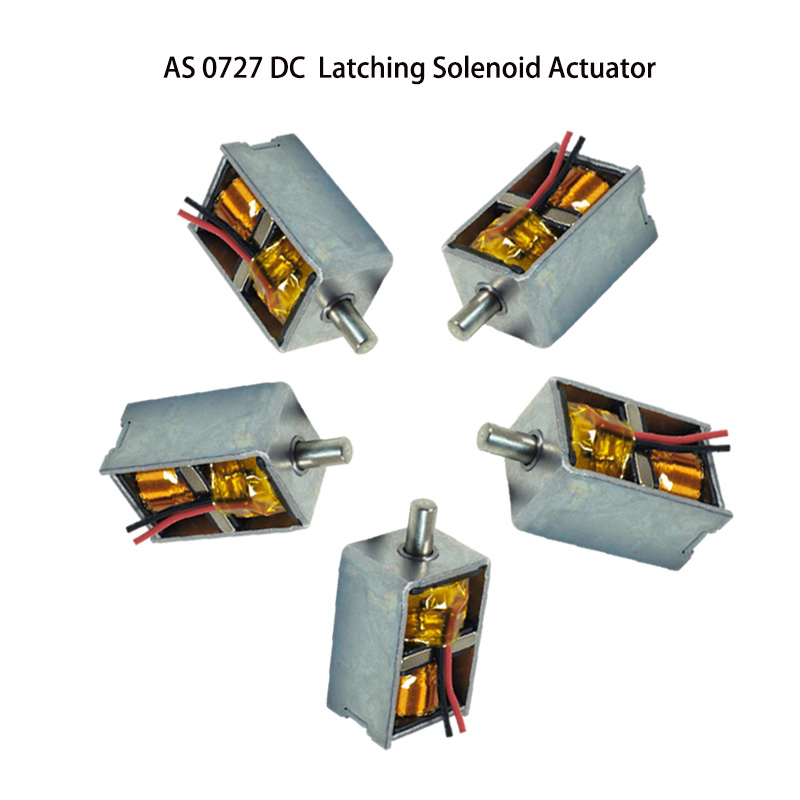
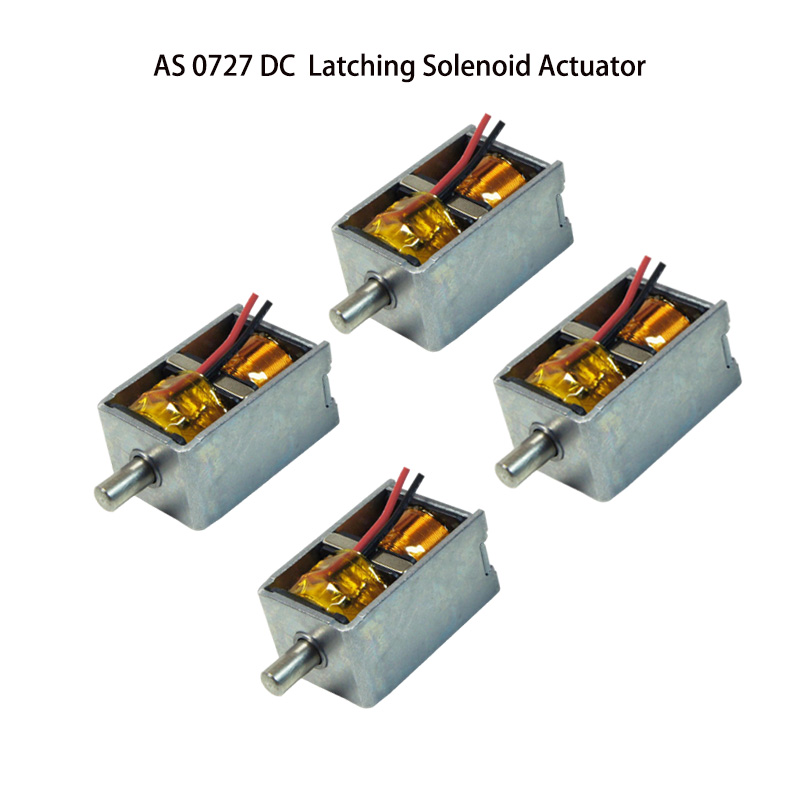
The AS0727 DC Latching Solenoid Actuator offers precise linear motion, and it’s a game-changer for energy efficiency in industrial automation. This clever bistable actuator only needs a quick electrical pulse to toggle between its extended and retracted positions. Once set, it stays put, drawing no power whatsoever. Designed for 24V DC systems, it cuts out constant energy use and minimizes heat, making it a great choice for applications with high duty cycles, battery-powered devices, and environments where heat is a concern. Built tough and dependable, the AS0727 is perfect for repetitive tasks in packaging machinery, textile equipment, material handling systems, and automated assembly lines. It’s a smart way to cut operational costs and boost sustainability. Get reliable linear actuation, lower your energy bills, and improve system reliability with this electro-mechanical solution.

Product Video

Product Specification 

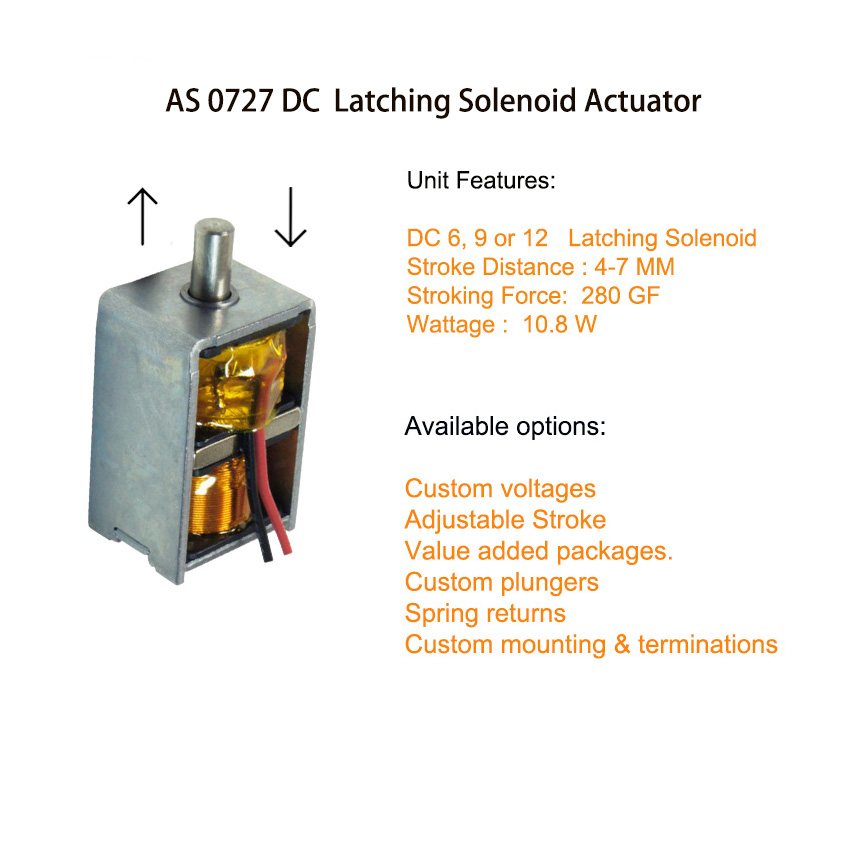
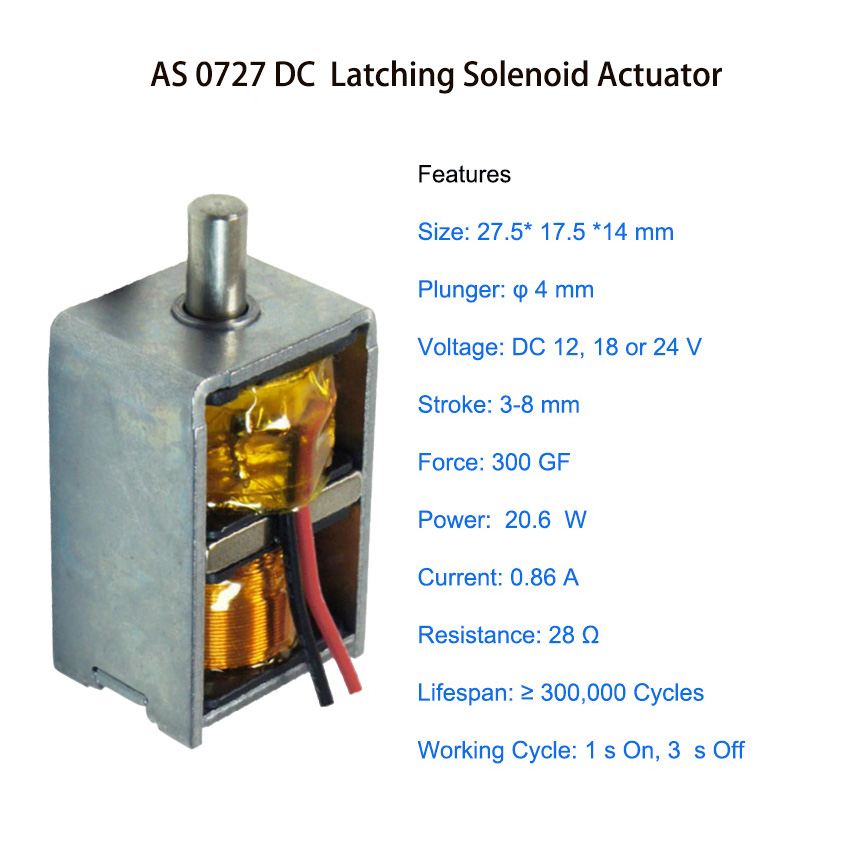
Brand AstSolenoid Model Number  AS 0727
Rated Voltage (V) DC 12V , DC 18V and DC 24V Rated Power(W) 24 W
Work Model Pull Push Type Holding Force (N)  280 GF
Stroke(mm) 3-8 MM for selection Reset Time(s) 0.2S ON, 2S OFF
Service Life 100 Thousand Times Certification CE,ROHS,ISO9001,
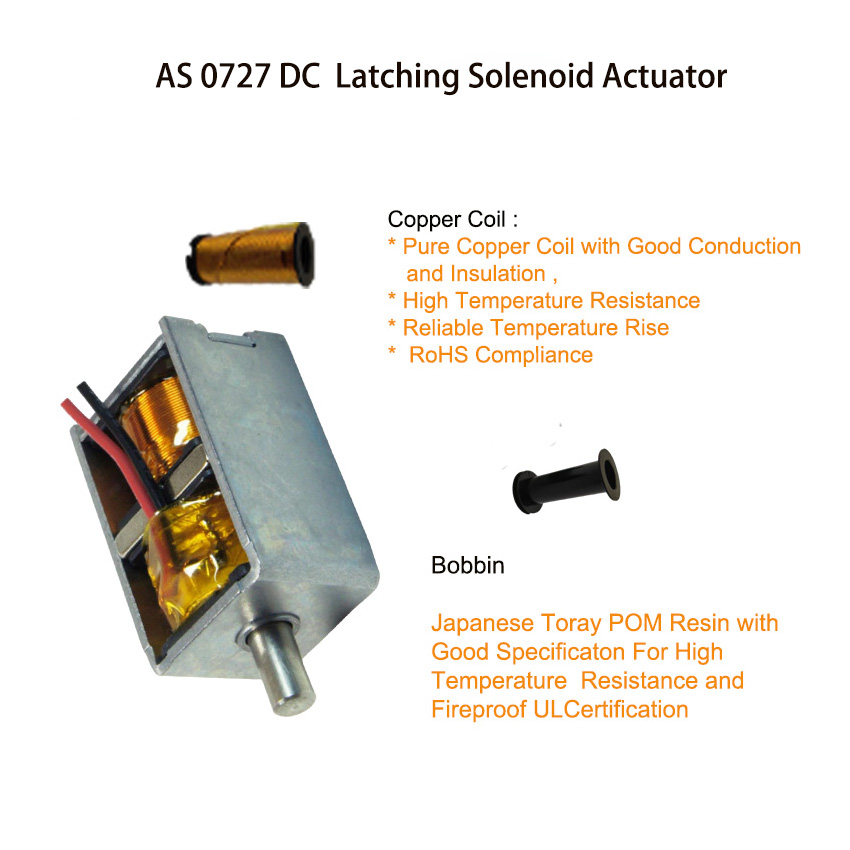
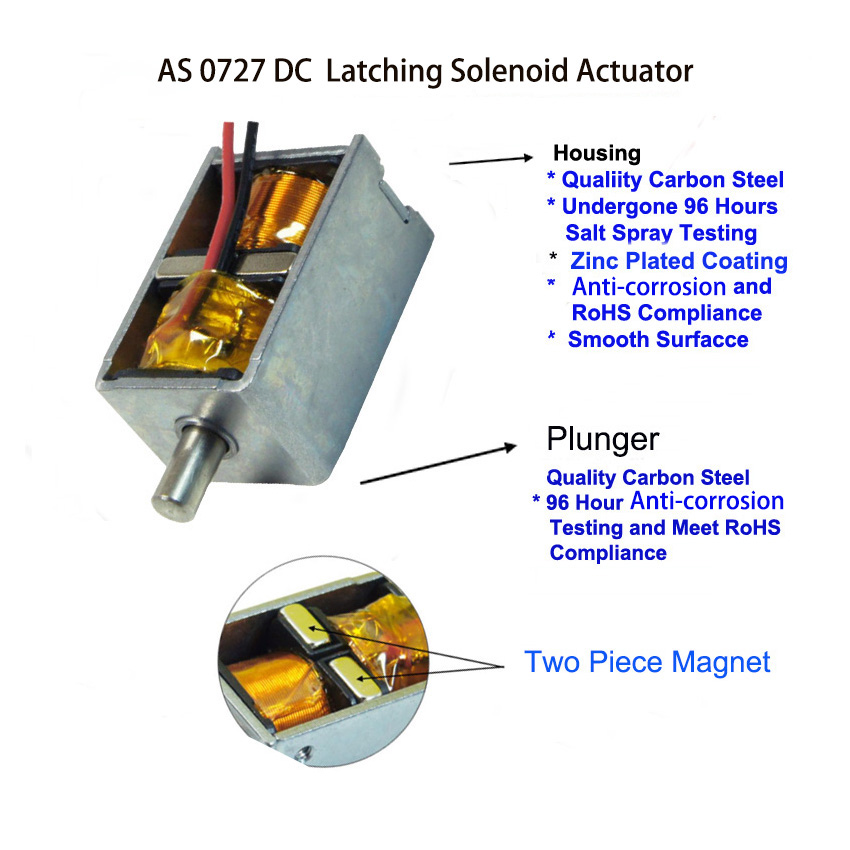
Material Superior Magnet Iron Lead Wire Length(mm) 200 MM
Install Style Screw Tolerance of Dimension  +/-  0.1 MM
Water-proof  None Insulation Class B
Hi-Pot Test AC 600V 50/60Hz 2s Non-excitation Holding Force 0
Working Temperature -10°C-100°C Duty Cycle 1-100%
Thread Depth(mm) / Payment Term TT, or LC At Sight
Sample Order Yes Warranty 1 Year
MOQ 1000 pcs Supply Ability 5000 pcs per Week
Delivery Time 30 Days Port of Loading shenzhen

Product Description

Product Structure:
Actuation Type: Bistable (latching) linear solenoid
Operating Principle: Electromagnetic pulse activation with mechanical/magnetic latching
Power Requirement: 24V DC pulse (typically 50-100ms duration)
Holding Mechanism: Permanent magnet or mechanical detent system
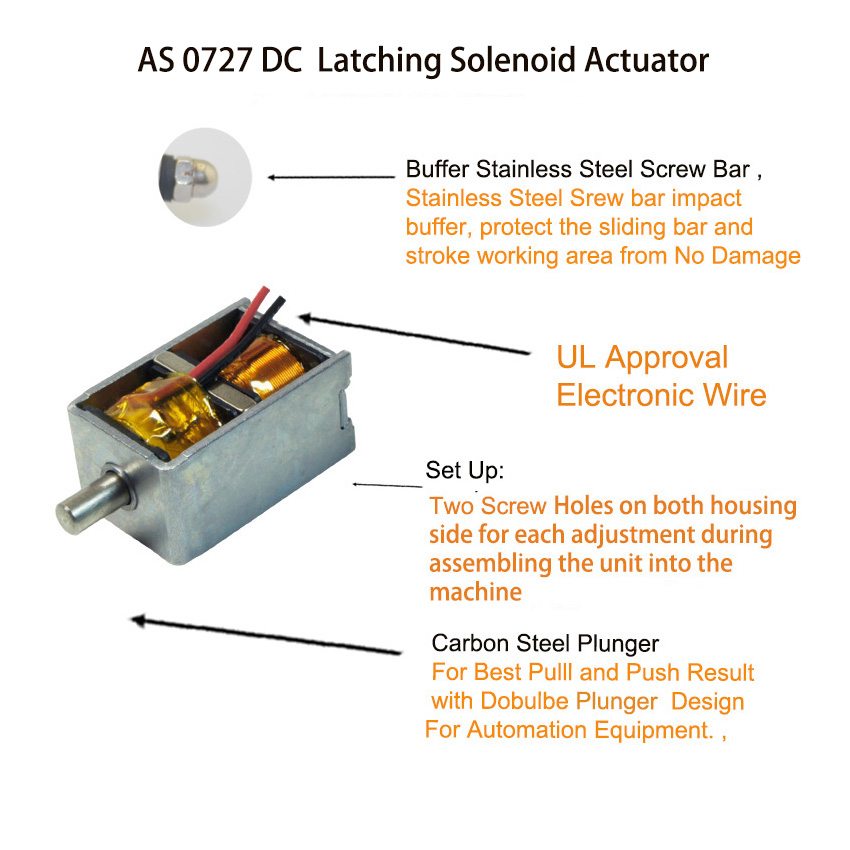
Construction: Industrial-grade housing with integrated mounting points
Interface: Standard electrical connections for pulse input
Stroke Length: [Specify based on model: e.g., 10mm, 15mm, 20mm]
Force Rating: [Specify based on model: e.g., 20N, 30N, 40N]
Comparison vs. Standard Linear Solenoid:
Power Mode: Pulse operation (AS0727) vs. Continuous duty (Standard)
Energy Consumption: Less than 1% of a standard solenoid’s equivalent.
Heat Generation: Negligible compared to significant heating.
Duty Cycle: 100% (can be continuously activated) versus limited by thermal constraints.
Control Circuit: Needs a pulse driver versus straightforward on/off control.
Uses:
Packaging Equipment: Carton sealing, product placement, gate operation.
Textile Machinery: Thread cutting, fabric clamping, loom functions.
Material Handling: Diverter gates, conveyor halts, sorting arms.
Automated Assembly: Part insertion, fixture clamping, positioning pins.
Printing Machinery: Paper handling, impression control, gripper systems.
Agricultural Automation: Seed dispensing, gate control, sorting mechanisms.
Battery-Powered Systems: Mobile equipment, remote setups, solar applications.
Security & Access Control: Bolt actuation, locking mechanisms, barrier systems
Pros and Cons:
Pros:
Unmatched Energy Efficiency: Slashes power use by 95-99% compared to conventional solenoids.
Cool Operation: No more heat problems in control panels and enclosures.
High Reliability: The absence of continuous current means less electrical stress and a longer lifespan.
Fail-Safe Positioning: Stays put during power failures, no backup needed.
Lower Operating Costs: Reduced energy consumption translates to lower electricity bills.
A Sustainable Choice: Supports green manufacturing and carbon reduction efforts.
Cons:
Higher Initial Cost: The more complex mechanism comes with a higher price tag.
Control Complexity: Needs specialized driver circuits to generate the right pulses.
Position Uncertainty: Feedback sensors might be necessary to verify the actuator’s state following a power cycle.
Limited Force Profile: The maximum force is dictated by the pulse’s specific characteristics, rather than a continuous power supply.
Response Time: The switching speed is constrained by the pulse duration.
Compatibility Issues: The AS0727 isn’t a drop-in replacement for standard solenoid circuits.
FAQ: AS0727 DC Latching Solenoid Actuator
Q1: How does the AS0727 achieve “zero-power hold”?
A1: The AS0727 employs either permanent magnets or a mechanical detent system. This system locks the plunger in place after a brief electrical pulse. Once latched, no electrical energy is needed to keep it there until the next pulse initiates movement.
Q2: What are the actual energy savings compared to a standard solenoid?
A2: The energy savings are significant. A typical 24V solenoid drawing 1A continuously consumes 24W. The AS0727, on the other hand, might only use 24W for a mere 0.1 seconds with each actuation.
For a machine cycling once per minute, this represents approximately 99.8% energy reduction.
Q3: Can I retrofit the AS0727 to replace existing standard solenoids?
A3: While physically interchangeable in some cases, electrical compatibility is different. You’ll need to replace the control circuit from simple on/off switching to a pulse driver. Check mounting dimensions, stroke, and force ratings for direct replacement feasibility.
Q4: What happens during a power failure? Does the actuator move?
A4: No. The AS0727 remains in its last commanded position during power loss. This “fail-in-place” characteristic can be advantageous for safety in many applications but means you may need position sensors if the system state must be known after power restoration.
Q5: Is there a risk of accidental unlatching from vibration or shock?
A5: High-quality latching actuators like the AS0727 are designed with sufficient magnetic or mechanical holding force to withstand typical industrial vibrations.For extreme vibration environments, consult specifications or consider additional mechanical locking.
Q6: How do I control the AS0727 with a PLC or microcontroller?
A6: You need an interface driver that converts standard digital outputs into properly timed bipolar pulses. Some controllers have dedicated latching solenoid outputs, or you can use the AS0726 controller module specifically designed for this purpose.
Q7: What maintenance does the AS0727 require?
A7: Minimal. The primary wear components are the mechanical latch mechanism (if present) and the plunger guide. Regular inspection for mechanical wear and testing of switching reliability is recommended, but the absence of continuous heat significantly extends component life.
Q8: Can the AS0727 be used in safety-critical applications?
A8: While reliable, any single component in a safety-critical system should have appropriate redundancy and monitoring. The AS0727’s fail-in-place characteristic can be beneficial, but position confirmation sensors are recommended for critical applications.
Shopping Cart